
















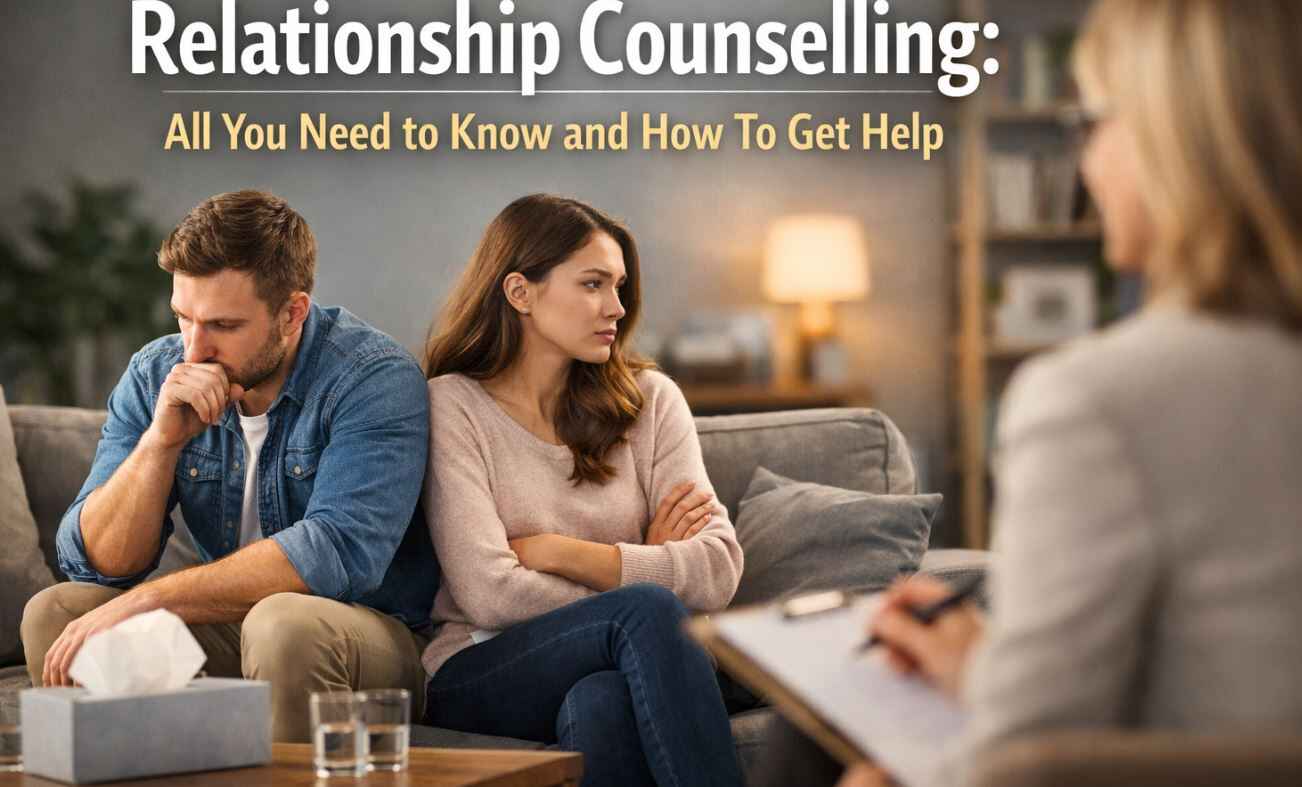
Relationships rarely fall apart because of one dramatic moment alone. More often, strain builds quietly. Two people who care about each other can end up feeling lonely in the same relationship. That is often where relationship counselling enters the picture.
Not as a sign that everything has failed, but as a structured way to understand what is happening, why it keeps happening, and whether healing is still possible. For some couples, it becomes the place where they finally say the things they have been circling for months or years. For others, it offers clarity about what needs to change and whether both people are willing to do that work.
Many people delay getting help because they associate counselling with crisis, shame, or final chances. In reality, relationship counselling can be useful long before things become extreme and toxic patterns set in. It can help couples rebuild communication, repair trust, handle transitions, and understand repeating patterns that ordinary arguments never seem to solve.
This guide breaks down what relationship counselling really is, when it helps, what to expect, and how to get help if your relationship needs support.
What Is Relationship Counselling?
Relationship counselling is a form of professional support that helps couples, and sometimes individuals, understand and improve the way they relate to each other. It gives people a structured space to talk through conflict, disconnection, trust issues, emotional needs, communication breakdowns, and the larger patterns shaping the relationship.
And research shows that relationship counselling works, and even better for couples who seek it earlier. It helps them avoid relationship distress. Even those facing problems are better served with relationship therapy.
The review showed that couples who are facing issues and seek therapy tend to do better than approximately 80% of those who are struggling but do not receive any treatment.
Unlike advice from friends or family, relationship counselling is guided by someone trained to notice patterns, manage difficult conversations, and help both people move beyond blame. A counsellor is not there to “win” the argument for either side. Their role is to help uncover what is happening beneath the surface and make healthier interactions possible.
Although many people think of it as something only married couples do, relationship counselling can help a wider range of people than that. Dating couples, engaged couples, long-term partners, separated couples trying to find clarity, and even individuals who want help with recurring relationship problems may all benefit from it.
At its best, relationship counselling is not just about solving today’s argument. It is about understanding the emotional system of the relationship itself.
How Relationship Counselling Works
The process varies depending on the counsellor, the couple, and the issues involved, but most forms of relationship counselling follow a broadly similar rhythm.
The first session usually focuses on understanding the relationship story and the main concerns that brought you in. A counsellor may ask how long you have been together, what the recurring problems are, how conflict tends to unfold, what each of you wants to change, and whether there have been major breaches of trust or important life transitions.
Some counsellors meet with both partners together throughout. Others may occasionally have individual sessions as part of the wider process. Either way, the aim is usually to understand not just the content of your conflict, but the pattern underneath it.
In many cases, relationship counselling involves identifying negative cycles. For example, one partner may pursue harder when anxious, while the other withdraws more when overwhelmed.
From the inside, each person feels justified. One feels abandoned. The other feels cornered. Counselling helps both people see the pattern as the problem, rather than treating each other as the enemy.
Sessions often include guided conversation, reflection, reframing, emotional clarification, and practical exercises. Some counsellors assign homework between sessions, such as communication exercises, journaling, time for reconnection, or boundary-setting conversations.
The length of relationship counselling depends on the situation. Some couples attend for a few sessions around a specific issue. Others work with a counsellor for several months when the problems are more entrenched or layered.
Why Relationship Counselling Matters
When a relationship becomes strained, couples often try the same tools they have always used. They talk more, argue harder, withdraw longer, apologize faster, or avoid the issue entirely.
Yet the pattern repeats. That is part of why relationship counselling matters. It interrupts cycles that feel normal from the inside but are damaging over time.
One of the biggest benefits of relationship counselling is that it helps people hear each other more accurately. Many couples are not only arguing about the issue in front of them. They are reacting to years of feeling dismissed, criticized, ignored, or unsafe.
A good counselling process slows things down enough for both people to understand what their reactions are actually connected to.
It also matters because unresolved relationship stress does not stay neatly contained. It affects sleep, work, parenting, self-esteem, mental health, and physical well-being. Couples may assume they need to simply “be stronger,” when in truth they need better tools, better structure, and often an outside perspective.
Sometimes relationship counselling helps people repair and reconnect. Sometimes it helps them make peace with the fact that the relationship cannot continue as it is. In both cases, the value lies in replacing confusion and repeated damage with clarity and informed action.
Signs Your Relationship Needs Counselling
Not every rough patch requires formal support. But certain signs suggest that the relationship is no longer resolving strain on its own.
One common sign is having the same argument over and over with different wording. The topic may be money, sex, family, time, effort, or trust, but the emotional ending is always similar. One person feels unheard. The other feels attacked. Nothing really changes.
Another sign is that communication has become tense or fragile. Perhaps small conversations escalate quickly. Perhaps one person shuts down. Perhaps both people have started editing themselves because speaking honestly no longer feels productive.
Trust issues are another major reason people seek relationship counselling. This can involve infidelity, dishonesty, secrecy, broken promises, emotional affairs, repeated unreliability, or even a general erosion of safety between partners.
You may also need help if emotional or physical intimacy has faded and the distance no longer feels temporary. Some couples are not constantly fighting, but they feel more like roommates than partners. The absence of open conflict can hide a deep absence of connection.
Resentment is another warning sign. Once resentment starts shaping how people interpret each other, even neutral actions get filtered through hurt. A forgotten text is no longer just forgetfulness. It becomes proof that someone does not care.
Life transitions can also push a relationship past what it can manage alone. New parenthood, job loss, relocation, grief, illness, financial stress, infertility, blending families, or caregiving responsibilities can all expose weaknesses that were easier to ignore before.
If one or both of you have begun thinking about separation but still want clarity, relationship counselling can help you understand whether repair is possible and what it would require.
What Relationship Counselling Can Help With
People often assume relationship counselling is only about fighting less. It can do much more than that.
It can help with communication problems, especially when conversations keep collapsing into criticism, defensiveness, contempt, avoidance, or silence. Many couples do not actually lack love. They lack a reliable way to speak and listen when emotions rise.
It can also help with conflict resolution. Some couples never resolve conflicts because they do not know how. Others think they are resolving things because the argument ends, but the issue remains alive underneath. Counselling can help distinguish true repair from temporary shutdown.
Trust and betrayal issues are a major area where relationship counselling may help. Rebuilding trust after deception is not about saying sorry once. It usually requires accountability, transparency, emotional honesty, and a process that can hold painful conversations without letting them become chaotic.
Counselling can also support couples dealing with emotional distance, mismatched needs, parenting disagreements, money stress, extended family pressure, sexual disconnect, or major life decisions. Premarital counselling, in particular, can help couples discuss expectations before avoidable misunderstandings become painful patterns.
For individuals, relationship counselling can also reveal repeating personal patterns. Some people keep choosing emotionally unavailable partners. Others struggle with boundaries, people-pleasing, jealousy, conflict avoidance, or fear of vulnerability. Understanding these patterns can change future relationships, even if the current one does not continue.
What Relationship Counselling Cannot Do
It is just as important to understand what relationship counselling cannot do.
It cannot force someone to care. If one partner is emotionally checked out and unwilling to engage honestly, counselling cannot manufacture investment where none exists. It may clarify that reality, but it cannot override it.
It cannot guarantee that the relationship will survive. Some couples enter relationship counselling hoping for certainty that love can be restored. Sometimes that happens. Sometimes the process reveals incompatibilities, repeated harms, or unwillingness to change that make staying together unhealthy.
It is not a quick fix. Deep patterns rarely shift because of one emotional session. If problems have built up over the years, they often require patience, repetition, and a willingness to practice new ways of relating outside the counselling room.
It also cannot replace personal accountability. A counsellor can help identify harmful patterns, but each person still has to take responsibility for their own behavior, habits, reactions, and choices.
And importantly, relationship counselling is not appropriate in every situation. In relationships involving abuse, coercive control, intimidation, or fear, standard couples counselling may not be the safest option. In such cases, safety and specialized support must come first.
What to Expect During Couple Counselling
People often imagine counselling as one long emotional confrontation. In reality, relationship counselling is usually more structured than that.
You can expect conversations that are more honest than your usual ones, but also more guided. A counsellor may slow you down, interrupt circular arguments, ask each person to reflect on what they heard, or point out emotional meanings that are being missed.
You may also be asked to discuss things that make you feel uncomfortable. That is part of the work. Relationship counselling often brings forward truths that have been avoided because they seemed too painful, too messy, or too likely to trigger another fight.
At first, progress may feel slow. That does not always mean it is failing. In many cases, the early stage of counselling is about learning a new pace and language. Couples who are used to reacting instantly may need time to build enough safety for more productive honesty.
You should also expect some emotional fatigue. Good counselling is not just venting. It requires attention, self-reflection, and the willingness to notice your own part in the pattern. That can feel humbling. Sometimes it feels relieving. Often it is both.
Is Relationship Counselling Only for Couples in Crisis?
Not at all. One of the biggest myths about relationship counselling is that it is only for relationships on the edge of collapse. In truth, many couples benefit before things reach that point.
Some people use relationship counselling preventively. They may want help before marriage, during the transition to parenthood, after a major relocation, or when blending families. These moments often bring new pressure, and dealing with it early can prevent deeper strain later.
Other couples seek counselling because the relationship is not terrible, but it is not thriving either. There may be love, loyalty, and shared life, yet something feels muted. Communication may be functional but not intimate. Sex may be infrequent and difficult to discuss. Conflict may never explode, but important needs remain unnamed.
In these cases, relationship counselling can strengthen a decent relationship before silent dissatisfaction hardens into distance.
Individual vs Couples Relationship Counselling
Although the phrase usually brings couples to mind, relationship counselling can also begin with one person.
Couples counselling makes sense when both people are willing to attend, and the goal is to understand the relationship dynamic together. This is often the most direct route when the issue clearly exists between partners.
But individual work may be the better option when one partner refuses to attend, when personal history is strongly affecting the relationship, or when someone needs help understanding their own choices, limits, fears, or patterns before they can show up differently in partnership.
Sometimes, one person starting therapy or counselling alone creates meaningful change in the dynamic. Not always. But it can still help that person gain clarity, emotional steadiness, and stronger boundaries.
If your partner refuses help, that does not mean you are powerless. Individual support can still be part of relationship counselling in the broader sense, especially when you are trying to decide what is healthy, what is realistic, and what your next step should be.
How To Get Help
Getting started can feel intimidating, especially if neither of you has done this before. Breaking the process into simple steps helps.
First, identify the main issue as clearly as you can. You do not need a perfect diagnosis. But it helps to know whether the main concern is communication, trust, recurring conflict, intimacy, family pressure, emotional distance, or uncertainty about the future.
Next, decide whether you are looking for couples work, individual support, or both. Some people search for relationship counselling, assuming couples sessions are the only option, when individual guidance might be the most practical first step.
Then begin looking for a qualified counsellor or therapist with experience in relationship work. Read their profile carefully. The right person should not only be licensed or trained appropriately, but also genuinely experienced in the kinds of issues you are facing.
Pay attention to practical factors too. Cost matters. Availability matters. Whether you prefer online or in-person sessions matters. The best support is not just theoretically good. It has to be realistic enough for you to actually use.
Finally, book an initial consultation or first session. You do not need full confidence before taking the first step. Often, clarity comes after beginning.
Getting the Best From Couple Therapy
Relationship counselling is not a magic solution, and it is not a sign of weakness. It is a tool. A serious one. Sometimes a healing one. Often a clarifying one.
When a relationship is hurting, many people wait for certainty before seeking help. They want proof that the problem is “bad enough,” or reassurance that counselling will definitely work. Real life rarely offers that kind of neat timing. More often, help is most useful when you already know that something in you cannot keep going in the same pattern.
Whether you are hoping to reconnect, rebuild trust, communicate better, or understand what is happening between you, relationship counselling can create a space for truth that everyday conflict often cannot. And in many relationships, that is exactly what has been missing.
If the connection matters, getting help early is rarely a mistake.


