


















There is a particular kind of connection that feels real, intimate, and emotionally charged, yet never quite becomes what it seems to promise. You talk often. You share parts of yourself. You may even rely on each other emotionally. Still, nothing is named, and nothing feels secure.
The Truth About Why He Pulls Away: 7 Reasons You Should Know

There is a specific type of confusion that hits when things finally feel stable. Conversations are flowing. Affection feels mutual. You begin to relax. And then suddenly he becomes distant. Calls slow down, messages shorten, his energy shifts. You find yourself wondering why he pulls away right when things seem good.
5 Reasons to Break Up and How to Make It Respectful

Ending a relationship is one of the most challenging decisions people face. Most individuals wrestle with guilt, uncertainty, and the fear of hurting someone they care about. Others struggle with doubts: “Should we break up?” “Am I giving up too soon?”, “What if I’m wrong?” or “Is there a right way to do this?”
This is How to Write the Best Dating App Profile
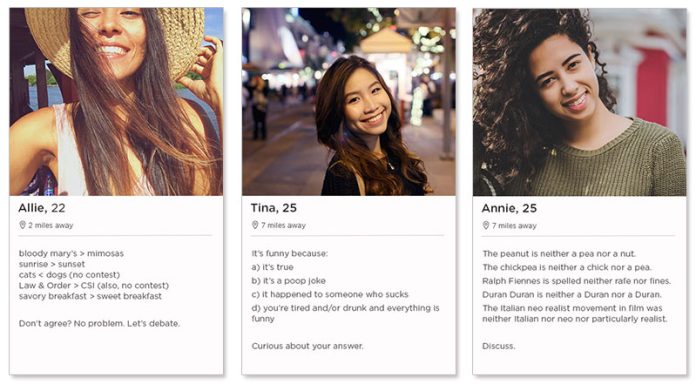
When it comes to dating apps, your dating app profile is a visual and written narrative that tells a story. It is your artistic self-portrait presented for a split-second judgment. For those seeking meaningful connections,
How to Make Someone Feel Loved: A Guide to Love Languages
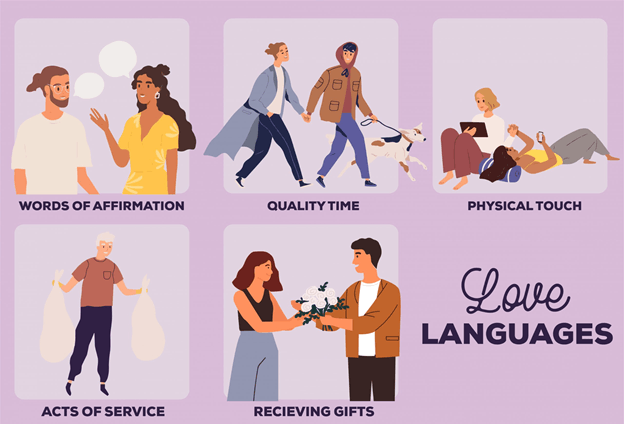
You adore your partner. You put in the effort. Maybe you spend hours cleaning the house, or perhaps you buy them thoughtful, expensive gifts. Yet, despite all your devotion and hard work, a familiar disconnect lingers. They might still feel unappreciated or distant. Why is your sincere effort not landing? The reason is simple but profound: You’re speaking your native language, but they need to hear theirs. That is why you need to know about love languages
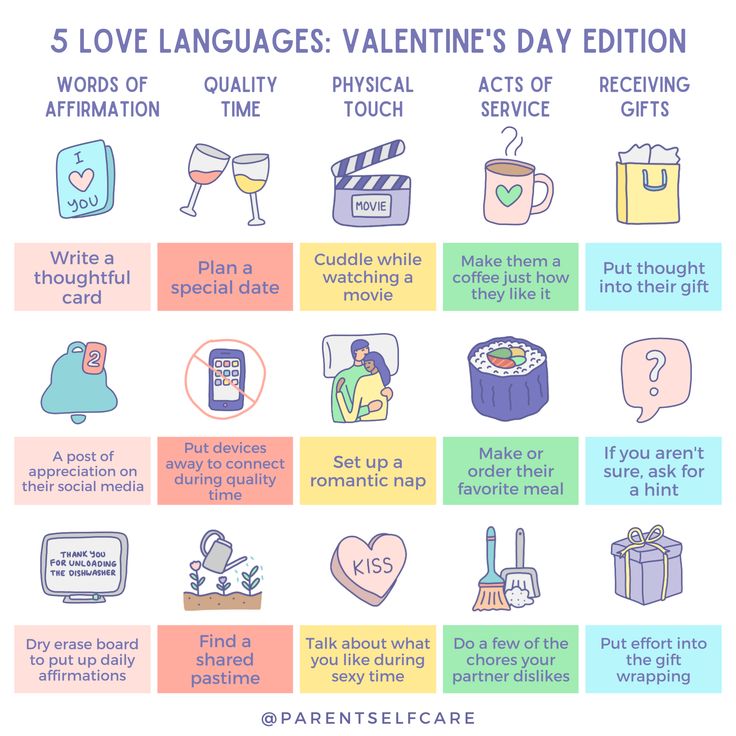
The 5 Love Languages framework, developed by Dr. Gary Chapman, isn’t a trendy personality quiz; it’s a powerful, actionable system for decoding emotional needs. It helps us understand the distinct ways we feel love. This guide shows you how to go beyond simply identifying your partner’s language and consistently and intentionally speaking it in the context of modern life, busy schedules, and shared stresses.
Why Love Languages Matter More Than Ever
The Empathy Gap: The Golden Rule vs. The Platinum Rule
The central challenge in love is the Empathy Gap. We naturally operate by the “Golden Rule of Love,” giving love the way we would want to receive it. If your primary language is Physical Touch, you instinctively hug your partner. But if their primary language is Words of Affirmation, they might process that hug as nice, but they feel loved only when they hear specific praise. This gap is the silent killer of emotional intimacy, leading to exhaustion and resentment.
The Emotional Bank Account
Think of your relationship as having an emotional bank account. When you successfully speak your partner’s primary love language, you make a large, high-value deposit. When you neglect their language, you are essentially making a withdrawal (or, at best, a zero transaction).
A high bank balance offers resilience. If you have to cancel a date (a withdrawal), a full account means your partner can easily handle it. But if the balance is low, a minor inconvenience can trigger conflict, as they are running on empty emotionally. Consistency in speaking their language keeps the account funded.
Interlinks to Core Relationship Skills
Understanding Love Languages is crucial for conflict resolution:
- Conflict Repair: An apology is a form of Words of Affirmation. If your partner’s language is Acts of Service, a verbal apology will feel hollow unless you follow it up by doing something like fixing the mistake, cleaning the mess, or taking over the task you neglected.
- Affirmations: Knowing the language ensures your praise hits the mark. A thoughtful token affirms a Receiving Gifts person, while your dedicated, undivided attention affirms a Quality Time person.
Decoding the Love Languages: Real-Life Examples in Action
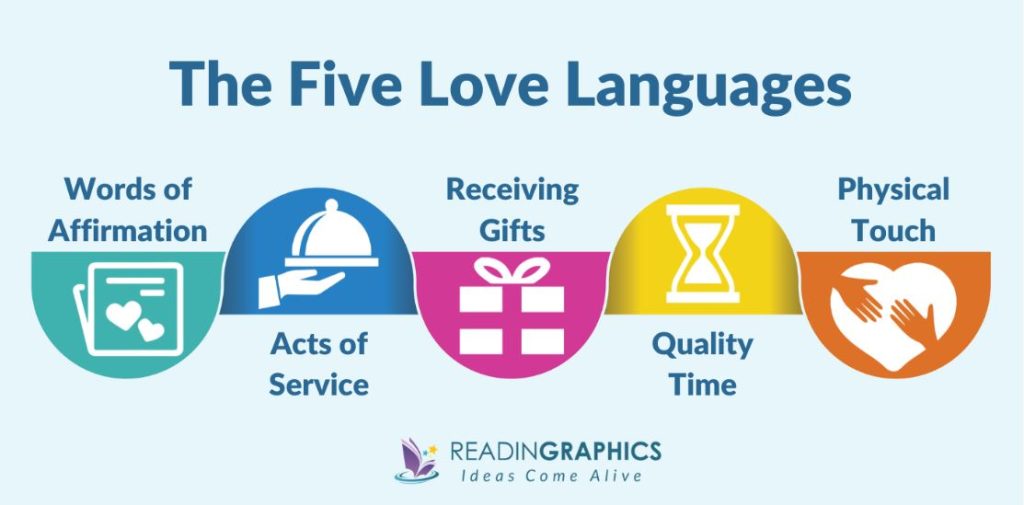
To truly make someone feel loved, your actions must be intentional. Here are real-world, high-impact examples for each language:
Words of Affirmation
This person needs specific, sincere, and consistent verbal appreciation.
- Instead of: “You look fine.”
- Try: “I was just thinking about how proud I am of the way you handled that client meeting today. You’re brilliant, and I love watching you succeed.”
- Actionable Tip: Send a surprise mid-day text detailing one specific quality you admire about them right now (e.g., their patience, their humor, their work ethic).
Acts of Service
For this person, actions truly speak louder than words. They feel loved when you alleviate their burden. Anticipation is the key.
- Instead of: Waiting to be asked to clean the kitchen.
- Try: “I noticed your work calendar is slammed this week, so I took the dog to the groomer, filled the gas tank, and picked up dinner for us tonight.”
- Actionable Tip: Create a “Honey-Do” list for yourself of things you know would reduce their stress, and complete one item before they even know it needs to be done.
Receiving Gifts
This is not about materialism; it’s about the emotional value of the thought and the visual symbol of being remembered.
- Instead of: Waiting for a holiday to buy something expensive.
- Try: Bringing home their favorite specific coffee order, a niche magazine you know they love but wouldn’t buy for themselves, or a souvenir from a work trip that shows you were thinking of them when you were apart.
- Actionable Tip: Document their “accidental hints”—keep a quick note on your phone when they mention liking something specific in a store or online.
Quality Time
This person needs dedicated, focused, undistracted attention. Time spent together only counts if they feel connected to you emotionally.
- Instead of: Watching TV together while scrolling phones and occasionally talking about work.
- Try: Scheduling 30 minutes of “undistracted time” where devices are explicitly banned, maintaining eye contact, and practicing active listening.
- Actionable Tip: Plan a focused “State of the Union” walk (no agenda, just talking, observing, and holding hands) once a week.
Physical Touch
This language refers to an intentional, non-sexual physical connection that conveys presence and safety.
- Instead of: Only touching during moments of intimacy.
- Try: Offering a simple hand on the small of their back as you pass them in the kitchen, a dedicated 10-second hug (a therapeutic minimum) before leaving for work, or cuddling and spooning during a movie (not just sitting beside them).
- Actionable Tip: Increase your non-sexual touch moments by 50% for a single week and observe the immediate difference in their mood and responsiveness.
The Mistakes People Make with Love Languages (And How to Stop)
Many couples get stuck because they make advanced love languages’ mistakes, even after learning the basics.
The “Love Bomb” Mistake
Giving a massive amount of your own language all at once (e.g., throwing a huge party when they just needed a note). This is exhausting for you and overwhelming for them. Consistency over intensity is the rule. Small, daily deposits are more effective than huge, quarterly “love bombs.”
The Weaponization Trap
Using their love language as leverage is emotional manipulation, not love. Saying, “I would do that Act of Service if you weren’t always…” instantly drains the emotional bank account. Love languages are tools for giving, not scorekeeping or negotiation.
The Assumption Flaw
Assuming their primary language never changes. The way we receive comfort can absolutely shift during periods of stress, grief, illness, or major life transitions. If your partner is dealing with intense pressure at work, their need for Acts of Service might temporarily eclipse their usual need for Quality Time. Keep checking in.
The “What’s In It For Me?” Syndrome
Viewing giving love as a transactional game (“I did two Acts of Service, now I deserve a hug!”). Love is a gift given freely, not a score traded for a reward. If you focus on filling their tank, yours will naturally be filled in return—but that cannot be the direct motivation.
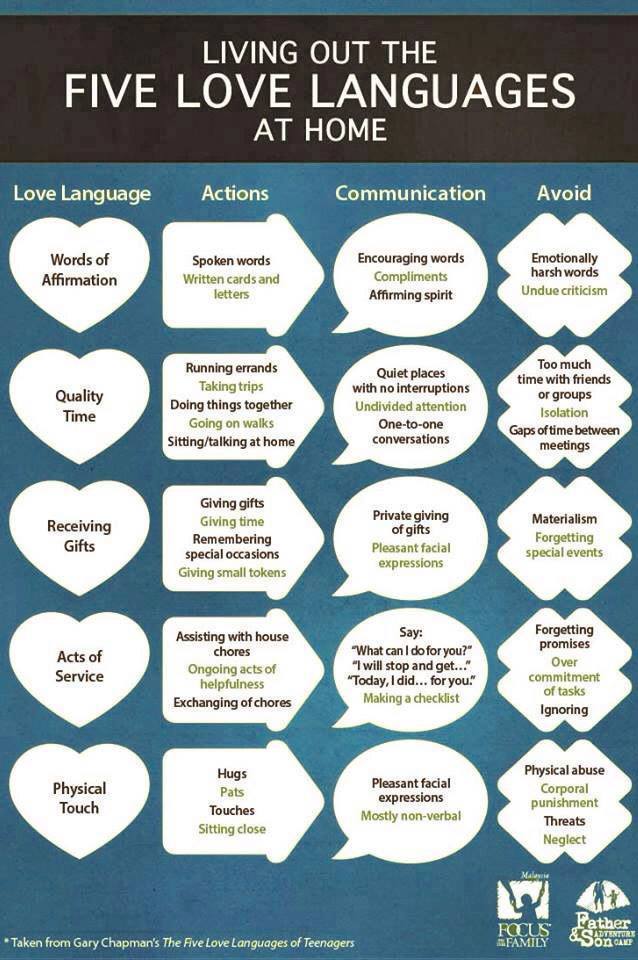
The Art of Translation: Loving Across the Love Languages
What happens when your natural way of giving love clashes directly with your partner’s receiving style? You need to become an expert translator.
The Dual Approach: Translating Your Impulse
Learn to “translate” your natural giving style into a delivery mechanism for their receiving style.
- Example: If your primary language is Receiving Gifts but your partner’s is Quality Time, don’t just buy a trinket. Translate your impulse by purchasing a board game, tickets to a show, or a meal kit you can cook together. The gift facilitates the time.
Ask, Don’t Guess (The “Menu” Strategy)
Remove the guesswork. Create a rotating “menu” of 3-5 small, specific things they could do for you in your language, and share yours.
- Example for Quality Time: “1. Can we sit on the balcony for 15 minutes without phones tonight? 2. Could you tell me one good thing and one hard thing about your day? 3. Can we go for a walk after dinner?”
This makes the giving process simple, specific, and stress-free for both of you.
The 80/20 Rule
To ensure maximum impact, focus 80% of your energy on their primary language and 20% on all the others. This ensures their core need is met reliably while the other languages provide a nice, well-rounded background of appreciation. You want to prioritize the actions that provide the greatest emotional return.
The Modern Love Languages Lens: Individuality Over Stereotypes
Moving Beyond “Men vs. Women”
Let’s be clear: The human need for love is universal, not gendered. Avoid stereotypes. Modern, healthy relationships are defined by individual needs, not outdated assumptions about what men or women “should” want. There are plenty of men whose primary language is Words of Affirmation and plenty of women whose primary language is Acts of Service.
Societal Programming vs. Genuine Need
While we must move past stereotypes, it’s worth acknowledging that societal programming can sometimes influence expression (how people learn to give love). For instance, someone might have been taught by their parents to express care only through Acts of Service. The counselor’s job is to look past this programming and identify the genuine, core need of the individual.
Focus on the Individual
The goal is not to generalize love languages based on demographics, but to listen actively to the specific person right in front of you. If your partner thrives on Quality Time, no amount of expensive tools or flowery notes will truly hit the mark. Listen to their complaints, observe what they ask for when they are stressed, and you will find their true language.
Consistency in Love Languages Use the Key to Connection
If love is a language, then feeling loved is a dialogue. It requires attention, translation, and practice. The power of this framework isn’t in labeling, but in inspiring intentional action.
Your ultimate challenge this week is simple: Commit to one small, daily act in your partner’s primary language. Do this for seven days straight and observe the immediate change in their mood, their resilience, and the overall atmosphere of your shared life.
Love is a verb. It is the daily, small translations that sustain a deep, felt connection. By learning to speak your partner’s true love language, you stop trying hard and start loving well.
How to Make Long-Distance Relationships Successful

Long-distance relationships are no longer unusual. Many couples today live in separate cities or countries due to work, education, or family responsibilities. While distance can strain even the strongest bond,
Slow Dating Surge: Why It’s the New Relationship Standard

The modern dating scene is characterized by a deep paradox. Never before have singles had such immediate access to potential partners, yet feelings of exhaustion and dissatisfaction remain common. Amidst this despair and discontent, slow dating is emerging as a new approach that promises greater fulfillment throughout the entire process.
How to Explore Ethical Non-Monogamy and Choose Your Best Fit

According to studies, Ethical non-monogamy (ENM) has moved from niche conversations into mainstream dating culture. Still, many people are unsure whether it is a healthy relationship structure for them, or even what it actually requires. This guide offers clear, judgment-free direction on ethical non-monogamy to help you assess your readiness, communicate with confidence, and avoid common pitfalls.
What Is Ethical Non-Monogamy?
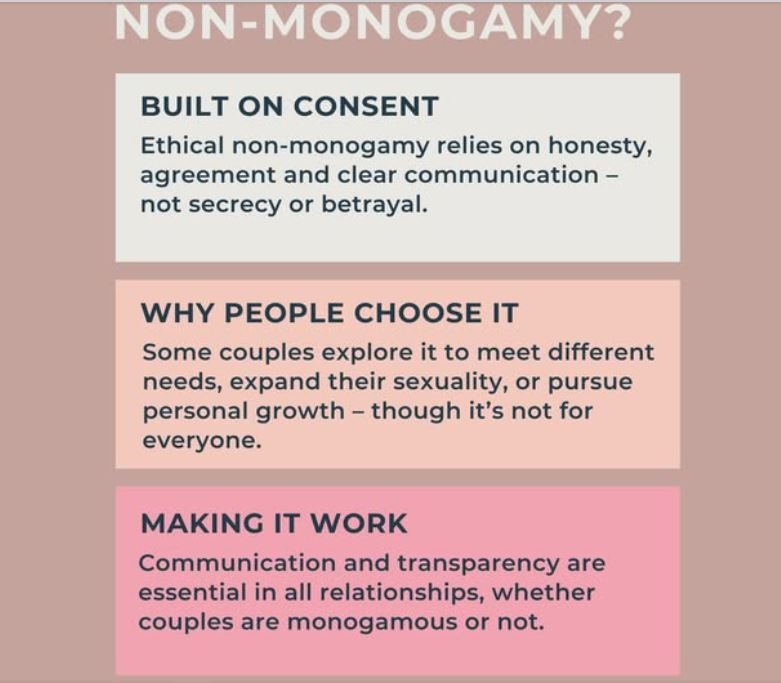
Ethical non-monogamy describes relationship structures where all partners agree that romantic or sexual exclusivity is not required. The keyword is ethical, meaning transparent, consensual, and grounded in mutual respect.

Types of Ethical Non-Monogamy to Consider
Ethical non-monogamy is not one model. It’s an umbrella term for several relationship structures, each with its own expectations, emotional demands, and communication needs. Understanding these options helps you choose what aligns with your values, personality, and emotional capacity.
1. Open Relationships
Open relationships typically involve couples who maintain a primary bond but agree that sexual or romantic interactions with others are acceptable under specific terms.
Key features include:
- Clear rules or boundaries (e.g., casual sex only, no sleepovers, limited emotional involvement).
- Transparency about outside partners or encounters.
- A shared understanding that the original partnership remains central.
This is often the easiest entry point for people exploring ENM for the first time.
2. Polyamory
Polyamory refers to engaging in more than one romantic or emotional relationship at the same time, with everyone’s knowledge and consent.
It can take several forms:
- Hierarchical polyamory: Partners acknowledge certain relationships as primary (e.g., legal spouse, shared household) and others as secondary.
- Non-hierarchical polyamory: Partners avoid ranking relationships, seeing each as unique and meaningful in its own way.
- Solo polyamory: Individuals prioritize personal autonomy—often living independently—and maintain multiple relationships without merging identities or households.
Polyamory tends to attract people who value emotional intimacy with more than one person and are comfortable balancing multiple deep connections.
3. Relationship Anarchy
Relationship anarchy (RA) deconstructs traditional expectations altogether. Instead of assuming what a relationship “should” look like, partners co-create the structure without hierarchy or predefined roles.
Core beliefs include:
- No automatic prioritizing of romantic partners over friends.
- High value placed on autonomy and individuality.
- Agreements are formed based on needs, not social norms.
RA appeals to people who dislike rigid categories and prefer organically defined connections.
4. Swinging
Swinging typically involves couples engaging in sexual activities with others—often together, but sometimes separately—with little focus on emotional relationships.
Common traits:
- Usually centered around sexual exploration rather than romance.
- Boundaries are clear and often strict.
- Frequently done within communities, events, or clubs built around shared interests.
Swinging is ideal for couples who want shared novelty without adding emotional relationships to their lives.
5. Monogamish
A term coined by Dan Savage, monogamish describes couples who are mostly monogamous but allow limited exceptions under mutually agreed conditions.
Examples include:
- Occasional flings during travel.
- Threesomes only.
- A “don’t ask, don’t tell” agreement (although many experts advise transparency over secrecy).
Monogamish arrangements work well for partners who desire monogamy as their foundation but acknowledge the value of controlled flexibility.
6. Polyfidelity
Polyfidelity is a closed relationship among three or more people who agree not to date or sleep with anyone outside the group.
Think of it as a “closed polycule.”
This option requires strong communication and compatibility, but it can offer stability for those who want multiple committed partners while maintaining exclusivity within the group.
7. Kitchen Table Polyamory
A style of polyamory where all partners—metamours included—are comfortable interacting socially, even casually.
The name comes from the idea that everyone should feel comfortable sitting around the same kitchen table.
Key elements:
- Community-like atmosphere.
- Higher emotional transparency.
- Cooperative scheduling and support.
It works best for people who appreciate interconnected relationships.
8. Parallel Polyamory
In parallel polyamory, partners are aware of each other’s other partners but do not interact socially.
This structure respects autonomy and privacy while still allowing multiple relationships.
It’s helpful when metamours differ in personality, lifestyle, or comfort level.
9. Don’t-Ask-Don’t-Tell (DADT) ENM
Some partners agree not to share details about outside relationships.
While controversial, it can work for:
- Individuals are uncomfortable with specifics but supportive of non-exclusivity.
- Long-distance or high-schedule-demand relationships.
However, DADT requires a strong trust base and clear sexual-health agreements.
10. Casual or Situational ENM
Some people engage in ENM only during:
- Travel
- Events
- Specific seasons of life
- Periods of exploration or discovery
These arrangements can work well when expectations are clear and communication is ongoing.
How to Choose the Right Ethical Non-Monogamy Structure
When exploring these options, ask yourself:
- Do I prefer emotional depth, sexual variety, or both?
- How much structure helps me feel safe?
- How much independence do I need?
- Do I want partners to interact or remain separate?
- Do I thrive with clear rules or flexible agreements?
ENM isn’t one-size-fits-all. You can mix, blend, and evolve your structure as you gain clarity.
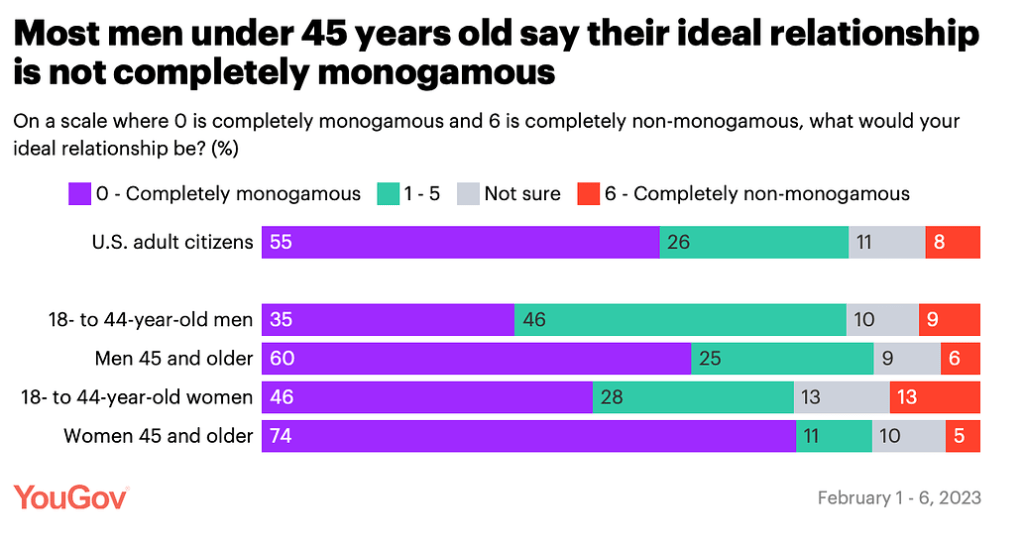
Signs You Might Be Suited for Ethical Non-Monogamy
Ethical non-monogamy isn’t superior to monogamy, and it isn’t a remedy for dissatisfaction. It simply fits people whose relational values and emotional habits align with openness, autonomy, and shared honesty. If you see yourself in the traits below, ENM may feel more natural than forced.
You Value Autonomy and Flexible Relationship Structures
People who gravitate toward ENM often enjoy shaping relationships in ways that reflect their needs rather than tradition. They’re comfortable with the idea that connection doesn’t have to follow one script. If you appreciate choice, independence, and a high level of personal agency, you may find that ENM allows you to be authentic without feeling restricted.
You Handle Emotional Conversations Without Avoidance
ENM relies heavily on dialogue—sometimes more than monogamy requires. You’ll likely need to discuss boundaries, insecurities, desires, scheduling, and emotional shifts. Someone who can stay regulated during sensitive conversations, ask questions with care, and revisit topics without defensiveness is better positioned to succeed.
You Can Feel Happiness for Partners’ Joy (Compersion Potential)
Compersion doesn’t have to be immediate or perfect. It simply requires the willingness to separate your partner’s happiness from personal threat. Research published in Psychology & Sexuality notes that people who develop compersion tend to experience more relational stability in polyamorous settings. If you can imagine supporting your partner’s joy—even when it doesn’t involve you—you’re already closer than you think.
You Don’t View Partners as Extensions of Yourself
Those who see their partners as whole, autonomous individuals often adapt quickly to ENM. Rather than thinking love must be exclusive to be meaningful, they approach intimacy as something that can grow without diminishing anyone. This mindset reduces possessiveness and makes space for honesty and mutual respect.
You’re Curious, Not Reactive
People drawn to ENM out of exploration rather than escape tend to have healthier experiences. Curiosity leads to growth; reactivity leads to conflict. If you’re approaching ENM to understand yourself and forge meaningful connections—not to avoid commitment or numb dissatisfaction—you’ll likely build a more grounded foundation.
Emotional Risks to Consider Before Starting Ethical Non-Monogamy

ENM can be deeply rewarding, but it exposes emotional patterns many people have never navigated. Being aware of potential challenges prepares you to respond thoughtfully instead of being blindsided.
Jealousy Intensifies Without Skills to Manage It
Jealousy is a normal emotional response in a relationship. The danger isn’t the feeling but rather the behaviors that follow if the emotion isn’t addressed. Without self-regulation and communication, jealousy can escalate quickly.
Comparison Can Surface Often
Your partner’s new connection may introduce comparisons you’ve never faced. Differences in interests, communication styles, or sexual chemistry can trigger insecurity. People who avoid these discussions or suppress feelings may struggle more than those willing to process them openly.
Time and Energy Can Become Overwhelming
Multiple relationships require time management, emotional presence, and reliable scheduling. Without mindful planning, burnout becomes a real risk. ENM works best when partners build realistic expectations about energy, availability, and emotional bandwidth.
Existing Relationship Issues May Worsen
ENM magnifies whatever is already happening. If communication is limited, trust is shaky, or conflicts linger unresolved, adding new partners can amplify the strain. Professionals often recommend strengthening the primary connection before opening up to reduce unnecessary pressure.
Jealousy Management Skills That Actually Work
Jealousy doesn’t signal failure. It signals a need—security, reassurance, understanding, or clarity. When handled thoughtfully, jealousy becomes a guide instead of an obstacle.
Identify the Root Emotion
Jealousy often masks deeper concerns such as fear of abandonment, fear of inadequacy, or fear of losing special status. Naming the true fear allows you to address what’s actually happening rather than the surface reaction.
Build Self-Esteem Outside the Relationship
People with a solid sense of identity outside their romantic connections adjust more easily to ENM. Strong friendships, personal goals, and hobbies help maintain self-worth. When your value isn’t tied solely to your partner’s attention, jealousy becomes less consuming.
Create Rituals of Connection
Small, consistent habits like weekly check-ins, shared meals, affectionate routines, or post-date debriefs—reinforce stability. These rituals anchor the relationship during periods of new connection energy or emotional fluctuation.
Use “Name It to Tame It”
Research by Dr. Matthew Lieberman at UCLA shows that labeling emotions reduces their intensity by engaging the brain’s regulatory systems. Simply saying, “I’m feeling insecure right now,” can lower emotional urgency and make room for constructive conversation.
Red Flags in Ethical Non-Monogamy
Consent is essential, but when it is given under pressure or without information does not make a situation ethical. Watch for the following warning signs.
One Partner Feels Pressured
If someone agrees to ENM to avoid conflict or prevent a breakup, it undermines the foundation of trust and mutual choice. Slow pacing and honest reflection are essential.
Lack of Transparency
Withholding information, hiding relationships, or abruptly changing boundaries breaks trust. Ethical non-monogamy depends on clarity, even when conversations are uncomfortable.
Unequal Freedom
If one partner explores freely while the other shoulders emotional labor, scheduling work, or rule enforcement, the imbalance grows quickly. Fairness doesn’t mean identical arrangements—it means reciprocal respect.
Using ENM to Avoid Commitment or Accountability
Some people frame non-monogamy as a way to avoid emotional responsibility. Healthy ENM requires commitment to honesty, communication, and care, not avoidance.
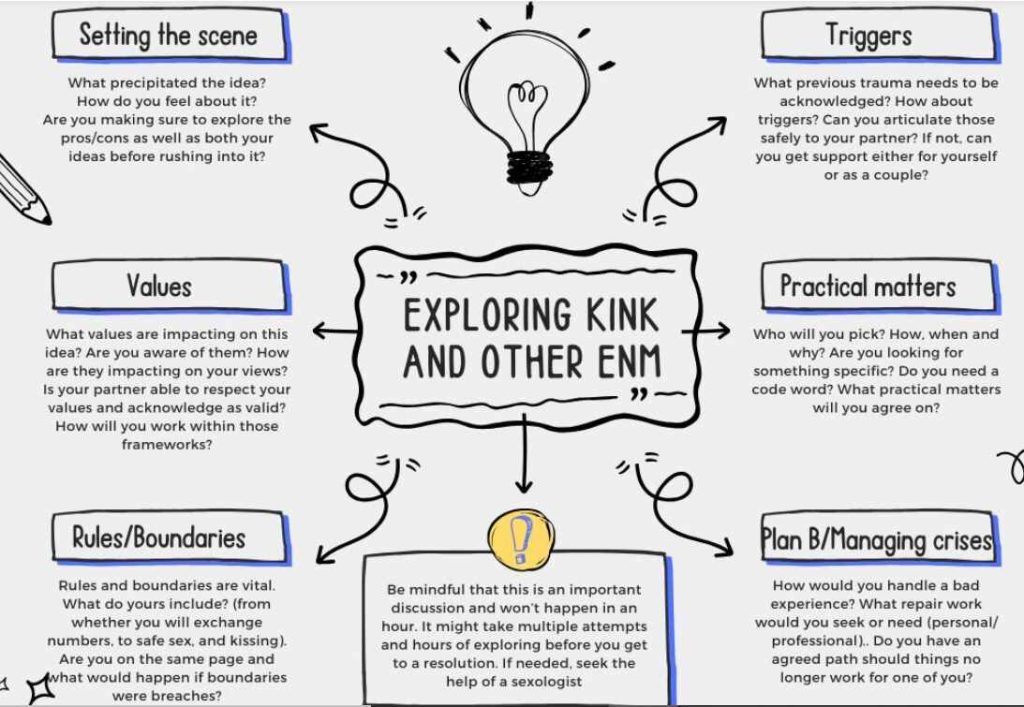
Safety Tips for Exploring Ethical Non-Monogamy
Whether meeting partners in person or through apps, emotional and physical safety should be woven into the structure from the start.
Sexual Health Agreements
Discuss STI testing frequency, barrier-use preferences, and disclosure timelines. Research from the Kinsey Institute indicates that individuals in consensual non-monogamy are often more proactive about testing and safer-sex negotiations, largely due to explicit communication.
Clear Logistics
Share reasonable details such as date, locations, general timeframes, and safety check-ins. This is not about surveillance; it’s about ensuring everyone feels secure while respecting privacy.
Emotional Aftercare
After significant milestones—like a partner’s first date or deepening emotional bond—it helps to schedule grounding conversations. These exchanges create reassurance and allow space for questions, concerns, or celebration.
Protect Existing Relationship Quality
Healthy ENM should support stability, not diminish it. Maintaining intentional time together, upholding prior commitments, and continuing emotional investment ensure your foundational connection remains strong as new ones grow.
How to Deal with My Ex: 20 Answers You Need to Know

Breakups raise many questions, with the basic one being How do I deal with my ex? And the period after can feel confusing. Below are common questions people ask about exes, answered with clear guidance supported by well-established research and expert psychological insights.
1. Is getting back together with my ex ever a good idea?
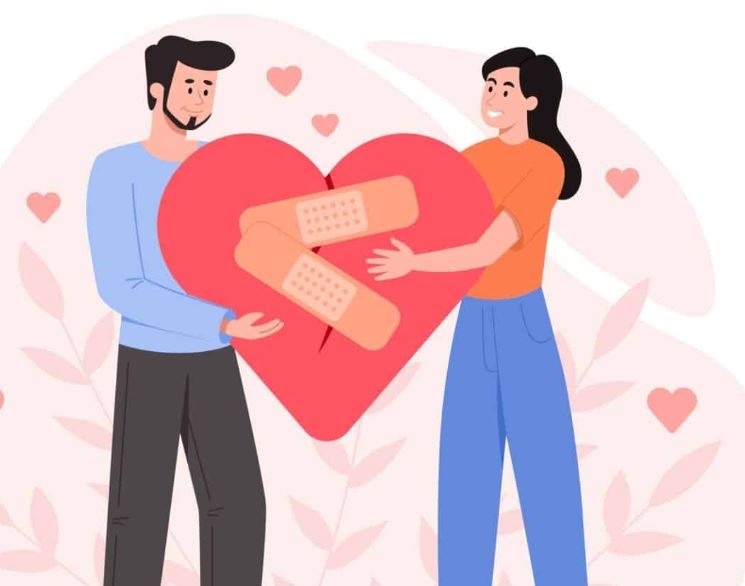
Yes, but only when both people have taken time to reflect, healed from the breakup, and addressed the issues that caused the split. Emotion on its own is not enough. Studies by Dr. René Dailey at the University of Texas show that “on-again, off-again relationships” that reconnect without solving their previous problems often repeat the same cycle. Reflective reconciliation—where communication gaps, expectations, and emotional triggers are addressed—leads to healthier outcomes. Before considering reunion, examine whether the breakup happened due to timing or circumstance rather than persistent patterns such as disrespect, inconsistency, or emotional withdrawal.
2. How do I know if my ex genuinely wants to try again?
Look for consistent communication, direct conversations about change, and actions that match their words. Psychologist Dr. John Gottman emphasizes that real relationship repair requires sustained effort, not sporadic affection. His work at the Gottman Institute shows that accountability, openness to discussing the past without defensiveness, and solution-focused conversations are stronger indicators of intent than affectionate gestures or apologies. Emotional warmth alone is not enough; reliability and clarity matter more.
3. Why do I still feel jealous when my ex moves on, even if I don’t want them back?
Jealousy after a breakup is normal and often reflects attachment, wounded pride, or fear of being replaced rather than a desire to reconcile. Research on attachment theory by Dr. Cindy Hazan, available through her work on adult attachment, shows that emotional bonds do not fade immediately, even when a relationship ends. Jealousy may come from comparing yourself to your ex’s new partner or feeling that the breakup reflects personal inadequacy. These feelings are emotional echoes, not a sign that returning to the relationship is the answer. Jealousy fades as you rebuild identity outside the partnership.
4. Can you stay friends with an ex without complications?
Yes, but only when both people have clear boundaries, no hidden motives, and genuine closure. A study published in Personal Relationships found that many people stay friends with exes for security or emotional support, but this often leads to confusion when one person is still attached. The research, which can be reviewed here, shows that friendships work best when both individuals have accepted the breakup and rebuilt their lives independently. If there was betrayal, imbalance, or lingering attraction, remaining friends often brings stress rather than stability.
5. Why does my ex keep contacting me even though they don’t want a relationship?
They may be seeking comfort, validation, or emotional familiarity rather than commitment. Psychologist Dr. Gary Lewandowski notes that many people struggle with losing “the person who knew them best,” even when romance has ended. His research on relationship processes, available through Science of Relationships and academic publications, shows that some exes use former partners as emotional cushioning during transition. While this contact may feel flattering, it often delays healing. Boundaries are necessary to prevent being stuck in an in-between space that blocks both closure and connection.
6. How do I communicate with my ex when we must stay in contact (e.g., co-parenting or shared work)?

Keep communication polite, structured, brief, and focused on shared responsibilities rather than personal matters. Family therapist Dr. Constance Ahrons’ work on “binuclear families,” which you can explore through her book The Good Divorce and related research at APA PsycNet, shows that co-parenting stability depends on respectful, predictable communication patterns. Neutral language, scheduled check-ins, and clear boundaries prevent unnecessary emotional entanglement. The goal is functional teamwork, not emotional closeness.
7. What are the signs that I need to cut contact with my ex completely?
Cut contact when interaction affects your mental health, triggers emotional setbacks, or keeps you from moving forward. Research published in the Journal of Social and Clinical Psychology shows that ongoing digital monitoring or repeated communication with an ex can delay emotional recovery. You can review related findings here. If communication causes anxiety, rekindles pain, or fuels hope when the relationship is not viable, no-contact gives your mind space to detach. It’s not punishment; it’s protection.
8. How long does it take to move on from my ex?
There’s no universal timeline, but many people begin to feel emotional relief after a few months. A study published in The Journal of Positive Psychology, which you can read here, found that participants experienced meaningful emotional improvement around 11 weeks post-breakup. This varies based on attachment style, relationship length, and how the breakup happened. Healing speeds up when you stay socially active, reduce rumination, and avoid checking on your ex.
9. Why does my ex seem to move on faster than I do?

People cope differently, and quick movement is not proof they were unaffected. Dr. Guy Winch explains in his work on emotional healing—available through his TED Talk and publications—that many people distract themselves to avoid emotional discomfort, which creates the illusion of fast recovery. Some enter rebound relationships as an avoidance strategy rather than genuine readiness. Your slower pace is not a sign of weakness; it simply means you’re processing your emotions honestly.
10. What should I do when I still love my ex but know the relationship was unhealthy?
Acknowledge the love while prioritizing emotional safety and long-term stability. Clinical psychologist Dr. Ramani Durvasula emphasizes in her research on narcissistic and high-conflict relationships, available through DoctorRamani.com, that love alone does not guarantee a healthy partnership. Many people remain attached due to emotional patterning rather than compatibility. Healing involves building new habits, redefining self-worth, and grieving not only the relationship but also the imagined future tied to it.
11. Why do I keep remembering only the good moments with my ex?
Selective memory during breakups is common because the brain tends to minimize painful memories to reduce emotional distress. Research from the Journal of Neuroscience, shows that emotionally significant memories—especially positive ones—are stored and recalled differently than neutral or painful ones. When a relationship ends, the mind often highlights the comforting parts instead of the conflicts that led to the breakup. This selective recall can make you second-guess your decision, but it’s simply the brain’s way of easing emotional shock, not evidence that the relationship was perfect.
12. Why does my ex act cold or distant after the breakup?
Distance is often a coping mechanism, not cruelty. Attachment research by Dr. Amir Levine and Rachel Heller in Attached shows that people with avoidant tendencies shut down emotionally when overwhelmed. Some withdraw because they fear further conflict or don’t know how to handle emotional conversations. Others distance themselves to accelerate healing. Their emotional detachment does not reflect your worth; it reflects their regulation style.
13. Why does it hurt more when an ex moves on quickly with someone new?
This pain often comes from comparison, fear of replacement, and the shock of seeing your former partner in a new relationship. A study published in Evolutionary Psychology explains that the human brain interprets a partner’s new relationship as a threat to emotional status and self-esteem. Even if you intellectually accept the breakup, seeing your ex with someone else activates psychological mechanisms related to rejection and self-worth. The reaction is natural and temporary.
14. Should I respond if my ex texts me “I miss you”?
It depends on your goals, emotional stability, and the history of the relationship. Psychotherapist Esther Perel, whose work you can explore here, notes that longing and missing someone do not automatically translate to readiness or capacity for a healthy partnership. “I miss you” can be genuine or driven by loneliness, nostalgia, or difficulty adjusting to change. Respond only if you are grounded enough to avoid slipping into emotional confusion and if the relationship was healthy or capable of being repaired.
15. How do I stop checking my ex’s social media?
Limit exposure through muting, unfollowing, or restricting what you see, because repeated viewing reinforces emotional attachment loops. A study in Cyberpsychology, Behavior, and Social Networking—available here—found that digital surveillance of ex-partners prolongs emotional distress and increases rumination. Social media creates illusions of closeness and can trigger comparison or jealousy. Reducing visibility helps the brain detach and accelerates healing.
16. Why does my ex reach out every time I start to move on?
This often happens because people sense emotional distance or a change in routine, and it triggers their fear of losing emotional access. Psychologist Dr. Cortney Warren explains in her writing at Psychology Today that intermittent contact from an ex is frequently driven by uncertainty, ego reinforcement, or difficulty letting go—not genuine desire for reconciliation. When an ex resurfaces during your healing phase, it is important to evaluate whether their timing supports your growth or disrupts it.
17. Why do some breakups feel harder even if the relationship was short?
Short relationships can carry strong emotional weight because intensity sometimes matters more than duration. Research in Emotion by Dr. Paul Eastwick—accessible through his publications here—shows that relational experiences form quickly when emotional novelty, chemistry, or hope for the future is high. When a short relationship contains strong emotional significance or imagined long-term potential, the breakup can feel disproportionately painful. The grief is tied to both the person and the future you mentally built with them.
18. How do I know if I am trauma-bonded to my ex?
Trauma bonding involves cycles of affection and conflict that create emotional dependence. Dr. Patrick Carnes’ research on trauma bonds, summarized through his clinical work here, explains that inconsistency in relationships activates powerful psychological conditioning. If you feel addicted to the highs and lows, rationalize mistreatment, or feel unable to detach even when unhappy, you may be experiencing a trauma-bond pattern. Identifying the cycle is the first step toward breaking it and reclaiming emotional safety.
19. Is it normal to feel lonely after a breakup, even when I know it was the right choice?
Loneliness is part of the adjustment phase because your brain is adapting to emotional and behavioral changes. A study in the Journal of Social and Personal Relationships—available through Sage Journals here—shows that post-breakup loneliness reflects the loss of routine support, validation, and companionship rather than regret. The loneliness does not invalidate the breakup; it simply means your emotional system is recalibrating. Staying connected to friends and practicing healthy routines helps this phase pass more smoothly.
20. How do I rebuild my identity after losing myself in a relationship?

Rebuilding identity starts with reconnecting to activities, values, and social ties that reflect who you are outside romance. Psychologist Dr. Arthur Aron’s “self-expansion theory,” available through his research here, shows that relationships naturally blend identities. After a breakup, you must consciously re-establish your personal goals, interests, and autonomy. Journaling, therapy, creative expression, and social engagement help rediscover your personal identity and reduce the emotional vacuum left by the relationship.
The Ultimate Modern Dating Tips: 9 Things You Need to know

Modern dating demands we adapt to a world reshaped by technology, shifting social norms, and evolving expectations. Between dating apps, social media, dating terms, and changing values around relationships, many old, unspoken rules no longer apply.


