















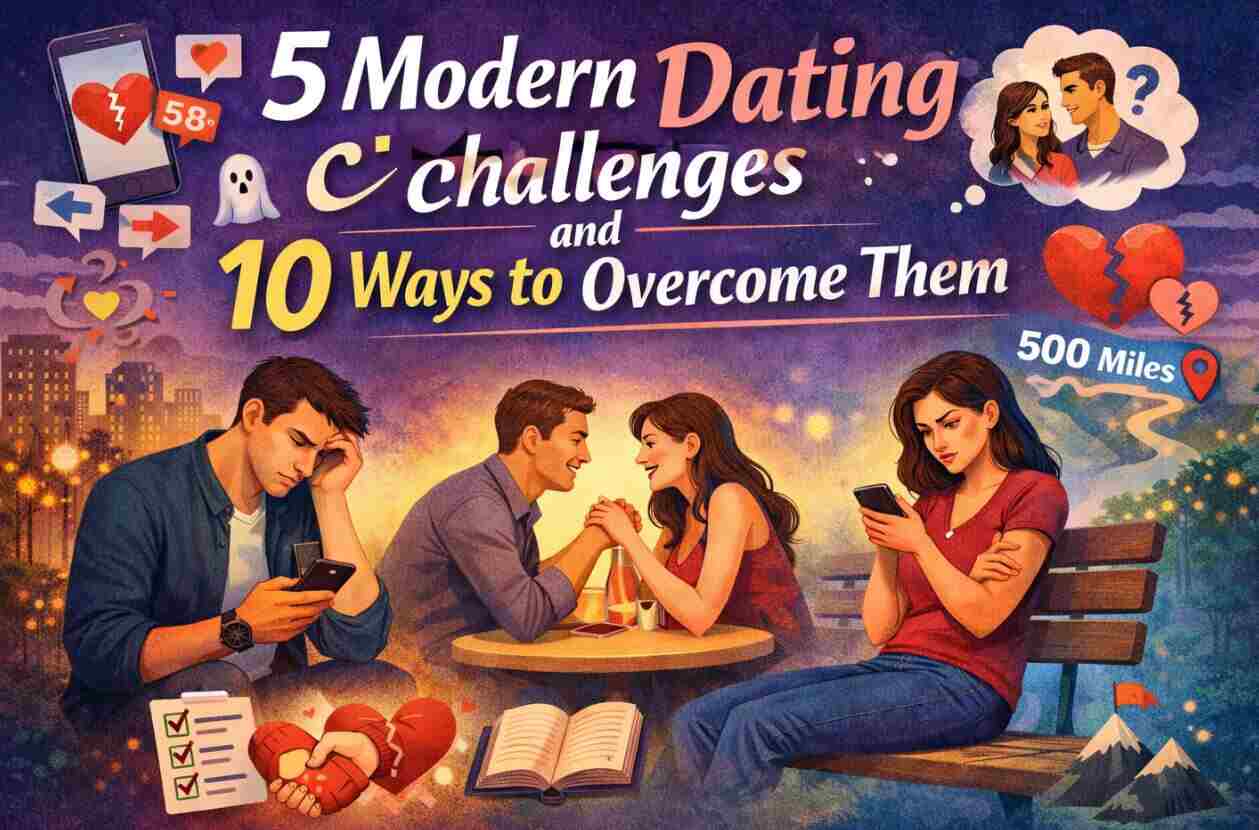
“Is it just me, or has modern dating become impossible?”
It isn’t just you. We are living through a period where technology has outpaced our social evolution. In 2026, we have more ways to connect than ever, yet the quality of those connections feels thinner. We are also dealing with of “digital shadows”—profiles that look perfect but lack substance, and interactions that feel more like a high-stakes interview than a romantic spark.
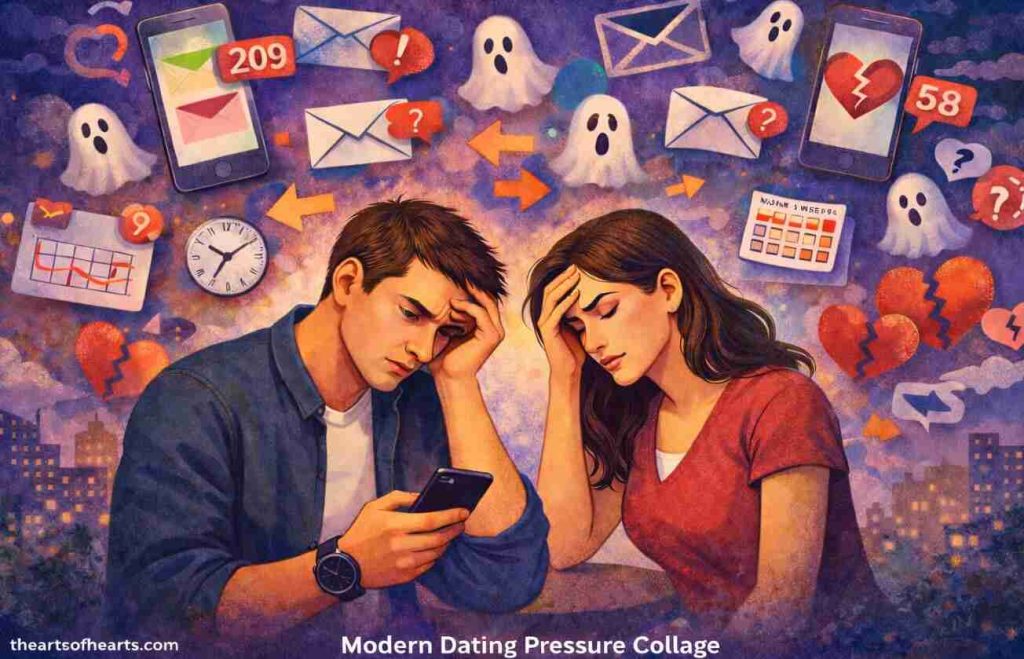
If you’re feeling burnt out, it’s because the “system” of modern dating is currently designed for efficiency, not intimacy. But you can opt out of the game and start dating with intention. Here are the five biggest challenges my clients face today, and ten practical ways to reclaim your love life.
The 5 Modern Dating Challenges of 2026
-
The Ghosting-by-Default Culture
Ghosting has shifted from a rude exit to a standard operating procedure. Because digital connections feel “disposable,” people often disappear rather than face the 30 seconds of discomfort required to say, “I didn’t feel a spark.” This creates a cycle of unresolved “micro-grief” for the person left behind, leading to a defensive wall that makes it harder to open up to the next person.
This phenomenon is rooted in “cognitive de-humanization,” in which the screen acts as a buffer, making the other person feel like a character in a game rather than a human with feelings. Over time, being ghosted repeatedly creates a “scarcity mindset,” making you settle for poor treatment just to keep a conversation alive.
-
“Breadcrumbing” and Artificial Intimacy
With the rise of social media integration, it’s easy for someone to keep you on “simmer” by liking a story or sending a meme without ever committing to a date. This is breadcrumbing—giving you just enough attention to keep you interested, but never enough to actually feed a relationship. It creates a false sense of connection that keeps you emotionally unavailable to people who actually want to show up.
This behavior often stems from a need for “ego-validation” rather than a desire for connection; the breadcrumber is essentially using your attention to regulate their own self-esteem. It keeps you in a state of “intermittent reinforcement,” a psychological trap that makes the occasional crumb feel more rewarding than it actually is.
-
The “Optimized” Persona vs. The Real Human
People are now so good at “curating” their digital selves—often using AI to polish their bios and professional-grade photos—that the person you meet in real life often bears zero resemblance to the profile you liked. This leads to “first-date deflation,” where you feel cheated by the gap between the digital promise and the physical reality.
This creates expectation debt,” where you arrive at a date already having fallen for a version of a person that does not exist. When the physical reality doesn’t match the digital hype, it leads to immediate “first-date deflation” and a sense of being subtly defrauded.
-
Paradox of Choice and “FOMO.”
The “Next Best Thing” syndrome is at an all-time high. Because the apps suggest there are thousands of local singles, users often treat partners like software updates—discarding them the moment a minor “bug” appears. This prevents the “slow burn” of attraction from ever taking root because everyone is looking for an immediate 10/10 perfection that doesn’t exist.
In behavioral economics, this is known as “maximalism,” where the search for the absolute best prevents the enjoyment of the “good.” This mindset kills the “slow burn” of attraction because people are too busy looking past their date to see who might be in the next swipe.
-
Weaponized Therapy Speak
A unique 2026 challenge is the rise of individuals using clinical terms as shields. You’ll hear things like, “I’m honoring my capacity right now,” or “I need to protect my peace.” While these sound healthy, they are often used to avoid basic accountability or to flake on plans at the last minute without guilt. It turns emotional intelligence into a tool for emotional avoidance.
This is a form of “intellectualized avoidance,” where someone uses the language of mental health to bypass the messiness of human interaction. It creates an environment where you can’t express disappointment without being labeled as “not respecting a boundary,” effectivel+-6y silencing the other person’s needs.
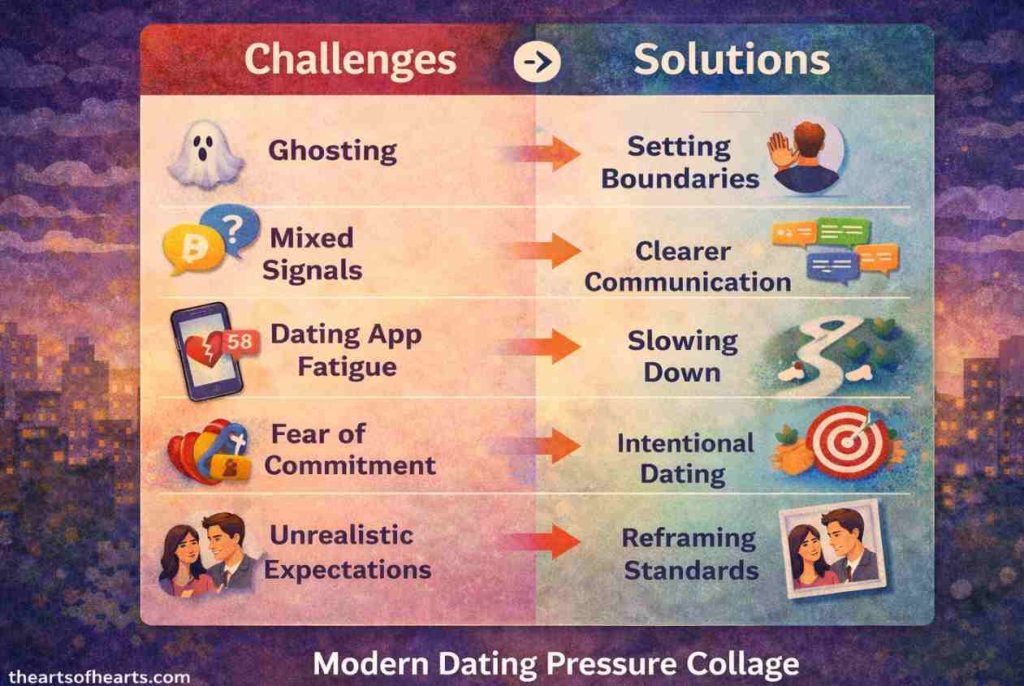
10 Ways to Overcome the Noise
-
The “First 48” Rule
To beat the “pen pal” trap, if a match doesn’t result in a concrete plan (time/place) within 48 hours of consistent chatting, move on. This is your filter for people who are actually ready to meet. If they are “too busy” to plan a 30-minute coffee within a week, they are too busy to date.
This filters for “intentionality” rather than just “availability.” People who are serious about dating prioritize scheduling, while those seeking a digital distraction will stall or offer vague excuses when pressed for a real-world meeting.
-
“Hard-Launch” Your Intentions
Stop “vibe-checking” and start Intent-Checking. Within the first five messages, clarify what you’re there for. Try: “I’m looking for something that has the potential to become exclusive. Is that the energy you’re bringing to the apps?” It feels bold, but it’s the most efficient way to clear the room of people who just want a distraction.
Directness acts as a natural repellent for the non-committal. By stating your goal—whether it’s marriage or a long-term partnership—you aren’t “scaring off” the right person; you are simply saving months by weeding out those whose goals don’t align with yours.
-
The “Low-Stakes” Zero Date
Combat “Persona Fraud” by keeping the first meeting under 45 minutes and under $20. A quick coffee or a walk in a public park allows you to see the “unfiltered” person without the financial or time commitment of a three-course dinner. Think of it as Date Zero—the “vibe check” before the actual date.
High-investment first dates (like expensive dinners) create a false sense of intimacy and a feeling of obligation. A “Zero Date” allows you to assess basic physical chemistry and “energy” without the “sunk cost” of an entire evening or a large bill.
-
Practice “Active Monogamy” While Browsing
Even if you aren’t exclusive, try focusing on only two conversations at a time. The Paradox of Choice is fueled by volume. By narrowing your focus, you give each person a fair chance to actually show their personality, rather than comparing them to a revolving door of new matches.
Human brains aren’t wired to build intimacy with 20 people simultaneously. By limiting your intake, you reduce “decision fatigue” and give yourself the mental space actually to remember details about the person you are talking to.
-
Call Out “Breadcrumbing” Directly
If someone is liking your stories but not asking you out, send one message: “I’m not looking for a digital cheerleader; I’m looking for a date. Let me know if you want to grab a drink; otherwise, I’m going to focus my energy elsewhere.” Directness is the only antidote to ambiguity.
Putting a spotlight on the behavior forces the other person to make a choice: step up or step out. It shifts the power dynamic back to you and prevents you from wasting mental energy on “interpreting” likes and comments that have no real-world value.
-
The “No-Swipe” Sunday
Protect your mental health from burnout by designating one or two days a week where the apps are deleted or hidden. Spend that time in “the wild”—a bookstore, a cafe, a run club. This reminds your brain that your worth isn’t tied to a red notification dot.
Constant app usage keeps your nervous system in a state of “high alert” for social validation. Taking scheduled breaks resets your dopamine receptors and reminds you that your social life exists outside of a digital interface.
-
Demand Clarity over “Therapy Speak”
When someone uses vague “therapy language” to flake, ask for specifics. If they say, “I don’t have the capacity,” you can respond, “I respect that. Does ‘no capacity’ mean you need to reschedule for Thursday, or that you aren’t interested in meeting anymore?” Force the clarity that the language is trying to hide.
Clarification prevents you from being gaslit by fancy terminology. It forces the other person to be honest about their interest level, ensuring that “boundaries” are used for protection rather than as a polite way to be unreliable.
-
Use Video Chat as a “Vibe-Filter”
To bridge the digital-to-physical gap, insist on a 5-minute FaceTime before the first date. It’s the fastest way to see if there is conversational chemistry and if they actually look like their photos. If they refuse a 5-minute call, they aren’t worth a 2-hour evening.
Voice and movement provide 90% of the information our brains need to determine attraction. A video call instantly reveals if someone’s photos are outdated and if the conversational “rhythm” you felt in text actually translates to speech.
-
Master the “Kind Rejection”
Be the change you want to see. If you aren’t feeling it after a date, send: “I enjoyed meeting you, but I didn’t feel the romantic connection I’m looking for. Best of luck!” This closes the loop, prevents you from becoming a “ghost,” and raises the standard of the dating pool for everyone.
This practice builds your “integrity muscle.” By being honest with others, you become more honest with yourself about what you really want, and it effectively closes the “open loops” that contribute to general dating anxiety.
-
Audit Your “Icks”
We often use small “icks” to protect ourselves from intimacy. If you find yourself rejecting people for trivial reasons (like their shoe choice or a slightly awkward text), stop and ask: “Am I looking for a reason to say no because I’m afraid of the vulnerability that comes with a real connection?”
Many “icks” are actually “defense mechanisms” designed to keep potential partners at a distance. Auditing these petty dealbreakers helps you distinguish between genuine incompatibility and the fear of being seen and judged.
Modern dating requires a thick skin, but it shouldn’t require you to lose your heart. Setting these boundaries, does not mean you are “difficult”—you are being high-value. You are teaching people how to treat you, and more importantly, you are protecting your own energy so that when the right person does show up, you’re actually ready to see them.