


















A better sex life isn’t built on chemistry alone. Even the strongest couples experience periods where desire feels muted or connection becomes harder to access. These moments aren’t signs of failure,
8 Easy First Date Actions That Secure A Second Date

Getting a first date is not hard, at least not as hard as getting the second date. There is plenty that could go wrong on the first date. An even greater challenge is the creeping doubts of whether anything actually went right, and if you even stand a chance.
7 Ironclad Ways to Keep Romance Alive in Long-Term Love

Every long-term relationship reaches an ironic moment where the very safety and comfort that make a relationship stable can also lead to predictability and the slow erosion of desire. The main challenge becomes how to keep romance alive. Couples suddenly find themselves at a point where everything about their lives is routine, and this includes their love lives, too.
Unfortunately, routine is a romance killer, and soon the spark and excitement of being in each other’s company flickers out. This comprehensive guide moves beyond simple date nights to provide 7 research-backed ways for transforming your relationship from functional teammates back into passionate partners.
1. Shift from Responsive to Proactive Connection to Keep Romance Alive

The core difference between relationships that thrive and those that drift is the level of intentionality. Thriving couples don’t wait for the spark to happen; they create the conditions for it.
The Ritual of Reunion
First, start with a reunion ritual. The end of the workday is a crucial transition. Instead of jumping straight into logistics, adopt a Ritual of Reunion. This means stopping all tasks and giving your partner your full attention for a few minutes. Dr. John Gottman recommends the “Six-Second Kiss,” a long, intentional kiss, as a powerful way to reset the emotional tone of the evening, flooding the brain with bonding hormones like oxytocin.
The 15-Minute Rule
Secondly, commit to at least 15 minutes daily of uninterrupted, non-logistics conversation. The goal is to Turn Toward your partner’s emotional “bids”, which are those small attempts to gain attention or affection. When you acknowledge their feelings, thoughts, and outer-world experiences, you deposit positive currency into the “Emotional Bank Account”, which is the fuel for passion.
2. Keep Romance Alive by Mastering the Art of Structured Conflict
Unresolved resentment is another significant passion killer. When conflicts are messy and damaging, partners avoid intimacy. Learning to fight fairly and communicating better is essential for emotional safety. Here is how you change your conflict structure to keep romance alive.

Identify the Four Horsemen
According to decades of research, Dr. Gottman identified four destructive communication patterns that predict relationship failure. Your first action is to actively eliminate these:
- Criticism: Attacking your partner’s character.
- Contempt: Treating your partner with disrespect (the most damaging).
- Defensiveness: Seeing yourself as the victim.
- Stonewalling: Withdrawing physically and emotionally.
The Time-Out Rule
When a discussion escalates, and one or both of you feel Emotionally Flooded (a heart rate over 100 bpm), call a 20-minute time-out. Walk away and self-soothe individually (read, listen to music, meditate). The rule is to always return after the break to address the issue calmly, preventing arguments from causing long-term damage.
3. Keep Romance Alive by Prioritizing Novelty Over Routine
Familiarity breeds predictability, which is the antithesis of excitement. Thus, injecting novelty into your love life can rekindle the spark.

The Novelty Spillover Effect
Studies have shown that couples who engage in novel and arousing activities together report higher levels of relationship satisfaction. The excitement from the activity (like rock climbing, trying a new cuisine, or a complex escape room) is often misattributed as excitement for the partner, boosting attraction.
Individual Growth
Encourage each other’s separate interests and personal growth. The “mystery” in long-term relationships is about staying dynamic, not hiding things. When your partner is constantly learning or evolving, you are exposed to a fresh version of them, which maintains curiosity and attraction.
4. Keep Romance Alive By Rethinking Physical Intimacy (Spontaneous vs. Responsive)
For long-term couples, expecting spontaneous, passionate desire often leads to frustration. Sexual desire often becomes responsive.

Schedule Your Sex Life
Contrary to what you may think, scheduled sex is not unromantic or mechanical. Instead, it is a strategic move to do away with common obstacles to sex. It removes the anxiety of initiation and ensures that the opportunity for arousal is created. Treat the scheduled time as a high-priority, dedicated date night that you can both look forward to, rather than an obligation.
The Power of Non-Sexual Touch
To prime the relationship for sex, increase your baseline of non-sexual touch. This includes holding hands while walking, giving long hugs, or cuddling while watching TV. These small acts consistently release oxytocin, building a physical sense of safety and closeness that makes sexual initiation easier and less awkward.
5. Commit to a High-Bar of Appreciation to Keep Romance Alive
When the relationship is comfortable, we often forget to acknowledge the daily contributions of our partner. This neglect is a quick route to resentment and the roommate phase.

Speak Their Love Language
Use Gary Chapman’s 5 Love Languages framework to ensure your efforts are felt. Your partner may not value flowers (Gifts); they might need Acts of Service (you doing a chore) or Words of Affirmation (verbal praise). Speaking their primary language is the most efficient way to fill their emotional tank.
Thanking Beyond the Transaction
Don’t just thank them for the things they have to do. Acknowledge their effort and care. For example, instead of “Thanks for the dishes,” try, “I really noticed how hard you worked to clean the kitchen today. It makes me feel respected when you take care of our space.”
6. Keep Romance Alive by Embracing Vulnerability and Curiosity
Vulnerability is a prerequisite for emotional intimacy, and curiosity is how you access it and keep romance alive.

The Curiosity Challenge
Commit to asking your partner questions that have nothing to do with usual plans and chores around the house at least three times a week. Ask questions that require them to share their inner world, and whose answers you do not readily know. These include: What are you most excited about right now? What is one big goal you have for the next six months? What is the hardest thing you dealt with today?
Share Shame and Fear
The deepest level of connection occurs when you share your insecure thoughts and fears with your partner. This builds radical empathy. When you trust your partner to hold your vulnerability without judgment, the resulting emotional intimacy is a powerful, long-lasting form of passion.
7. Keep Romance Alive by Scheduling the State-of-the-Union Meeting

Finally, make the health of your relationship a structured priority.
The Weekly Check-In
Every week, hold a structured, non-crisis meeting about 30-60 minutes to discuss:
- Appreciation: List three things you genuinely appreciated about your partner this week.
- Issues: Discuss one issue or conflict you need to resolve.
- Calendar: Discuss logistics last, briefly.
By dedicating time to both the “business” and the appreciation of the relationship, you contain conflict and ensure positive emotional health is maintained. This action makes the rest of your time together genuinely romantic.
You Have the Power to Keep Romance Alive
The journey to reigniting passion in a long-term relationship isn’t about finding a magic spark; it’s about making a series of intentional, consistent choices to move your relationship out of the comfortable rut of functional companionship.
You’ve learned that keeping the fire alive is not just about scheduling sex, but about creating emotional safety through disciplined conflict, generating novelty to combat predictability, and proactively turning toward your partner’s bids for connection every day.
Remember these core truths:
- Passion is responsive, not spontaneous. You must deliberately create the conditions for desire.
- Contempt and unaddressed resentment, not boredom, are the true relationship killers.
- Small, daily rituals like the Six-Second Kiss or the 15-Minute Rule build the emotional reserves necessary for intimacy to thrive.
The work of reigniting passion is a shared responsibility, but it starts with a single step. You now have the seven essential ways. Don’t let comfort become complicity and your path to relationship detah. Instead, choose one way to keep romance alive and implement it today.
Your long-term love deserves this investment. The fire is not dead; it’s waiting for your consistent attention.
20 Awesome FAQs: How to Revive Romance & End “Roommate Syndrome

How to revive romance is a question that most people in long-term relationships or marriages often find themselves asking. Often, it is because their love life has been plagued by the roommate syndrome. The relationship becomes just another daily chore or routine, nothing fun, and there is no spark. If left unchecked, it often leads to bitterness, unfulfillment, and ultimately cheating or the end of the relationship.
Fortunately, you do not need to suffer alone; many like you are seeking the answers on how to end the roommate syndrome and revive romance. Here are answers to 20 awesome questions on how to revive romance, and these should set you on the right path to saving your relationship or marriage.
How to Revive Romance Step 1. Understanding The “Roommate Syndrome”

1. What is the “Roommate Syndrome,” and how do I know if we have it?
The Roommate Syndrome is the loss of intentionality and romance in a relationship, where partners live parallel lives. Signs include: conversations that are 80% logistics (kids, bills, schedules); minimal non-sexual touch (hugs, kisses); and a lack of curiosity about your partner’s inner life. The romantic spark has fizzled out, and you and your partner resemble people who have a living arrangement sharing some responsibilities, hence the name.
2. Is it normal for the “spark” to die after a few years?
The initial intense, dopamine-fueled spark naturally fades after a couple of years. Neuroscientific studies indicate that the intense “limerence” phase, characterized by high levels of dopamine and norepinephrine, typically lasts between 12 and 36 months. This is replaced by a more stable, oxytocin-fueled attachment (the bonding chemical), which requires deliberate effort to maintain passion.
3. Does losing the spark mean we are falling out of love?
Not necessarily. It usually means you’ve let convenience and comfort take priority over deliberate effort. Most couples who experience the fade still love and value each other; they’ve simply stopped prioritizing the relationship as lovers and started prioritizing it as teammates in life management.
4. What is the biggest culprit for killing romance in long-term relationships?
According to decades of research by Dr. John Gottman, the biggest culprit is Contempt. Contempt, which manifests in a variety of ways like acting superior, mocking, or displaying hostility, is the top predictor of divorce. Even its milder form, unaddressed resentment, is harmful because it destroys the emotional intimacy needed for passion.
How to Revive Romance Step 2: Rebuilding Emotional Connection

5. What are the best small, daily rituals to reconnect emotionally?
Implement a Ritual of Connection. Try the “Six-Second Kiss” when greeting each other, a concept popularized by the Gottman Institute. A prolonged kiss is proven to increase positive affect and release oxytocin (the bonding hormone). Alternatively, commit to a “20-Minute No-Logistics Check-in” after work where you only discuss feelings, thoughts, and outer-world experiences.
6. How can we shift conversations from chores to connection?
Create a Logistics Blackout Zone. Dedicate specific times (like dinner, dates, or the first 30 minutes after getting home) where all discussion of bills, chores, and children is banned. If one partner brings it up, the other says, “Logistics out of bounds for now, tell me one great thing about your day.”
7. What is “Turning Toward Bids,” and why are they important?
A “bid” is any attempt by a partner to get attention, affection, or humor (e.g., a sigh, showing a meme). Research by Dr. Gottman found that couples who stay together turn toward their partner’s bids 86% of the time, compared to only 33% for couples who later divorce. Turning Toward means responding positively and acknowledging the bid, which builds the “emotional bank account.”
8. How do we communicate appreciation without it feeling forced?
Use specific, affirmative language that links the action to the positive feeling. Instead of “Thanks for cleaning up,” say, “I really appreciate you cleaning the kitchen; it makes me feel calmer and more relaxed when I walk in the door.” Focus on the impact of their action.
How to Revive Romance Step 3: Reigniting Physical and Sexual Fire

9. Our sex life has stalled. Should we schedule sex?
Yes, scheduled sex is often a lifeline, not a death sentence, for desire. For long-term couples, desire is often responsive, meaning it follows arousal and stimulation, rather than being spontaneous. Scheduling ensures the opportunity for arousal is created, promoting consistent intimacy and reducing the anxiety of initiation.
10. How can we increase non-sexual touch (affection) in our daily lives?
Non-sexual touch (cuddling, hugging, holding hands) is the “gateway drug” to sexual intimacy. It releases oxytocin, lowering stress hormones like cortisol. Commit to the 3-Touch Rule: make sure you physically connect at least three times per day, not as a prelude to sex, but just to feel close and maintain positive physical contact. For more tips, this article provides practical actions to keep romance alive in your relationship.
11. What if one partner has a much lower libido than the other?
This requires empathetic communication. Dr. Emily Nagoski, author of Come As You Are, emphasizes understanding the partner’s “brakes and accelerators” (what inhibits and what encourages arousal). The high-desire partner must de-personalize the rejection, and the couple should prioritize low-pressure, non-goal-oriented touch (sensate focus exercises) to reintroduce pleasure without the demand for climax.
12. How do we introduce novelty in the bedroom after years together?
Novelty activates the brain’s dopamine (pleasure) system, countering the effects of habituation. Research suggests that engaging in novel and challenging activities together (even outside the bedroom) increases relationship satisfaction and feelings of love because the shared excitement is attributed to the partner. Start with low-stakes novelty: change the time of day or location, or discuss a low-stakes fantasy.
How to Revive Romance Step 4: Breaking the Routine Embracing Novelty

13. How important is it to take “Adults Only” time away from the children?
It is critical. Taking time away helps couples shift from the Parent Identity back to the Partner Identity. Research indicates that couple-only time significantly contributes to relationship quality, even when couples are happy with their parenting roles.
14. How can we make date night feel special again, not just a routine dinner?
Focus on shared, novel, and exciting experiences instead of passive ones. Studies have shown that couples who engage in more exciting activities together report higher levels of relationship satisfaction than those who stick to pleasant but mundane activities. Try activities that promote mutual learning or mild adrenaline (e.g., escape rooms, new classes).
15. What is “Emotional Flooding,” and how does it kill romantic conversations?
Emotional Flooding is a physiological state where one partner is so overwhelmed (heart rate over 100 bpm) during conflict that rational thought and clear communication cease. Research shows this state is highly damaging. The intervention is the Time-Out—a 20-minute break where both partners self-soothe individually, lowering the heart rate before returning to the discussion calmly.
16. What is the role of self-care in bringing the fire back?
Self-care is a relationship responsibility. Exhausted, resentful, and overwhelmed people do not have the emotional or physical capacity to be romantic. Prioritizing individual well-being (sleep, fitness, stress reduction) ensures both partners show up as their best selves, able to give and receive connection.
How to Revive Romance Step 5: Long-Term Strategy and Maintenance

17. How can we figure out what kind of romance our partner actually wants?
Learn their Love Languages, a framework popularized by Gary Chapman. By speaking your partner’s primary language (Words of Affirmation, Quality Time, Receiving Gifts, Acts of Service, or Physical Touch), you ensure your effort is meaningful and felt, maximizing your romantic return.
18. What is a “state-of-the-union” meeting, and should we have one?
Yes. A State-of-the-Union meeting (or check-in) is a structured, non-crisis meeting, ideally once a week, to discuss relationship logistics, issues, and appreciation. Dr. Gottman advocates for this to clear the air so that serious issues don’t contaminate the rest of the week’s spontaneous connection time.
19. How do we keep the “mystery” alive when we know everything about each other?
Focus on individual growth. The “mystery” isn’t about secrets, but it’s about seeing your partner evolve and grow. Studies suggest that relationships thrive when partners support each other’s personal growth (non-shared goals). By encouraging separate hobbies and continued learning, you introduce a novel, new person to your partner regularly, which sustains attraction.
20. When should we stop trying to fix it ourselves and seek professional help?
The final piece in how to revive romance is knowing when to get help. If you find yourselves stuck in the same negative conflict pattern (e.g., criticism, defensiveness, contempt, stonewalling, the Four Horsemen of the Apocalypse, per Gottman research), or if you are both simply “checked out,” it’s time to seek a qualified couples therapist. They provide the neutral guidance and evidence-based tools (like the Gottman Method) necessary to successfully shift deep-seated patterns.
20 Eye-Opening FAQs on How to Rebuild Trust After Betrayal

Rebuilding trust after infidelity is one of the hardest challenges a couple can face. This guide provides direct, actionable answers to the most common and urgent questions people have on how to rebuild trust after betrayal.
20 Tips on How to Flirt Successfully Without Being Cringe

Flirting should feel easy, natural, and comfortable for both people. Unfortunately, many end up unsure because they try too hard or rely on lines that feel staged. It may even feel more daunting considering the new modern dating trends that define current expectations and behavior. Fortunately, some rules are still timeless, and research and expert relationship counselors all agree on the same thing. That is, successful flirting blends calm confidence, honest interest, and good timing. This guide provides
20 Revealing FAQs on Best Communication Strategies for Couples

Healthy communication is the foundation of any relationship and a crucial part of a lasting and rewarding partnership, whether in dating or marriage. Many fights are brought about and could be ended with better communication practices between partners. Here are the answers to 20 FAQs on the best communication strategies for couples to help you have a fulfilling relationship.
1. What does healthy communication look like in a relationship?

Healthy communication is characterized by honesty, respect, and a focus on listening rather than reacting. It involves expressing your needs clearly and giving your partner space to share theirs without fear of judgment. Couples who communicate well focus on understanding, not winning. They speak to connect, not to score points.
A strong sign of healthy communication is when disagreements don’t escalate into personal attacks. Both people can pause, regulate emotions, and return to the conversation calmly. When communication is healthy, difficult conversations feel possible and not dangerous.
2. Why do couples fight over small things?
Small conflicts often signal larger unmet needs, such as attention, respect, or appreciation. When these needs go unmet, even minor issues can trigger emotional reactions. The argument isn’t really about the dishes or the tone but about the deeper feelings beneath them. The best communication strategies involve recognizing the root causes, as this helps prevent recurring conflicts.
Often, the “small thing” becomes the safe expression of a bigger frustration that hasn’t been named yet. A helpful step is to ask yourself, “What’s the real need I’m trying to express?” and communicate that instead of the surface issue.
3. How do I communicate better without starting an argument?
Use calm tone, “I feel” statements, and avoid blame-heavy language. Share how the situation affects you instead of accusing your partner of wrongdoing. Stick to one issue at a time and choose the right moment. Gentle beginnings prevent defensive endings.
It also helps to check in before starting the conversation, asking, “Is this a good time to talk?” This small courtesy builds cooperation and reduces tension. Timing and tone matter just as much as the words themselves.
4. Why does my partner get defensive when I express my feelings?

Defensiveness often stems from feeling criticized or inadequate. Your partner may interpret your emotions as a personal attack even when that isn’t your intention. Reframe the conversation around how you feel rather than what they did wrong. Safety invites openness.
If this happens often, talk outside the heat of conflict about how you can both communicate without triggering defensiveness. Sometimes partners need reassurance that sharing feelings isn’t blaming them but connecting with them.
5. What is the right way to apologize in a relationship?
A good apology centers on the impact, not your intent. It includes acknowledging the action, owning the emotional effect, and expressing sincere remorse. You should briefly state how you’ll do better next time and ask what your partner needs to feel supported.
If your apology is honest, your partner will feel seen and cared for, even if they need time to heal. Avoid rushing forgiveness; the sincerity of your follow-through matters just as much as your words.
6. How do I talk to my partner when I’m angry without making things worse?
Take a brief pause before initiating the conversation to regulate your emotions. Use a steady tone and focus on describing your feelings rather than attacking their behavior. If you feel yourself escalating, ask to continue later. Calmness protects connection.
You can also preface the conversation with, “I’m frustrated, but I want us to understand each other and not fight.” This signals your intention and reassures your partner that the goal is resolution, not conflict.
7. How do I know if I’m being misunderstood?
Ask clarifying questions like “Can you tell me what you heard me say?” This reduces assumptions and reveals any gaps in understanding. Miscommunication is common, especially in emotional moments. Slowing down improves accuracy.
It also helps to repeat back what your partner said to confirm you got it right. Mirroring their words, without mocking or exaggeration, keeps conversations grounded and respectful.
8. Why do some conversations keep repeating?
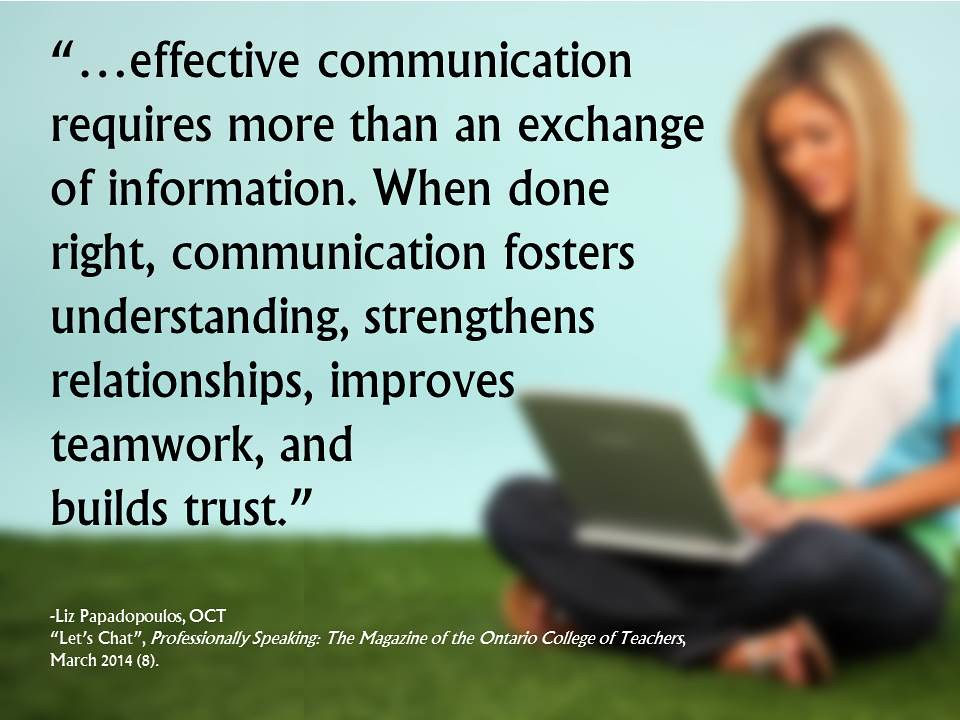
Recurring conflicts often signal a deeper unresolved issue. When couples argue about the same topic, it usually means a need isn’t being acknowledged. Address the pattern, not just the event. Understanding the root causes breaks the cycle.
Consider asking, “What do you need from me in these moments that you feel you’re not getting?” That question alone often reveals the emotional layer beneath the repetitive conflict.
9. What is stonewalling, and how do I respond to it?
Stonewalling happens when someone shuts down emotionally to avoid conflict. It’s usually a sign of overwhelm, not indifference. Give your partner space and revisit the conversation when they’re calmer. The goal is reconnection, not pressure.
You can also agree on a signal or phrase like “I need a break” so withdrawal doesn’t feel like abandonment. Structure turns stonewalling from avoidance into a temporary pause for self-regulation.
10. How do I communicate when my partner shuts down?
Stay patient and speak gently without demanding immediate answers. Validate their feelings and offer room to breathe. Many people need time to process before they respond. Keeping the environment safe encourages them to re-engage.
Check in softly after some time with something like, “I’m here when you’re ready to talk.” This keeps the door open without overwhelming them.
11. How can we repair communication after a big argument?
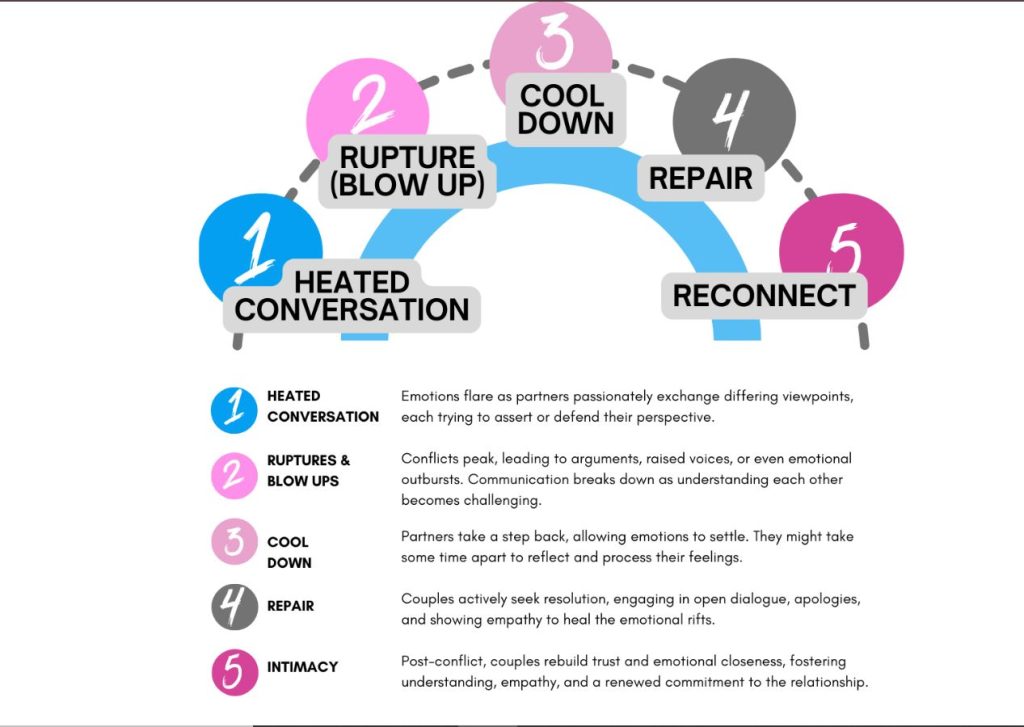
Begin by acknowledging what went wrong and validating each other’s experience. Use repair attempts, especially small gestures that soften tension, such as empathy, humor, or a sincere apology. Focus on what you both learned from the conflict. Repair builds resilience.
Set a shared rule like “We talk about the conflict only once we’re calm.” This prevents arguments from spiraling and helps both partners return with clarity instead of anger.
12. How important is timing when discussing sensitive issues?
Timing can make or break a conversation. When either person is stressed, tired, or distracted, emotional topics escalate quickly. Wait for moments of calm and choose a private, relaxed setting. Good timing increases cooperation.
Pay attention to environmental cues since no one communicates well when rushing, multitasking, or irritated. Choosing the right moment shows respect and boosts the odds of a productive conversation.
13. How do I bring up a concern without sounding critical?
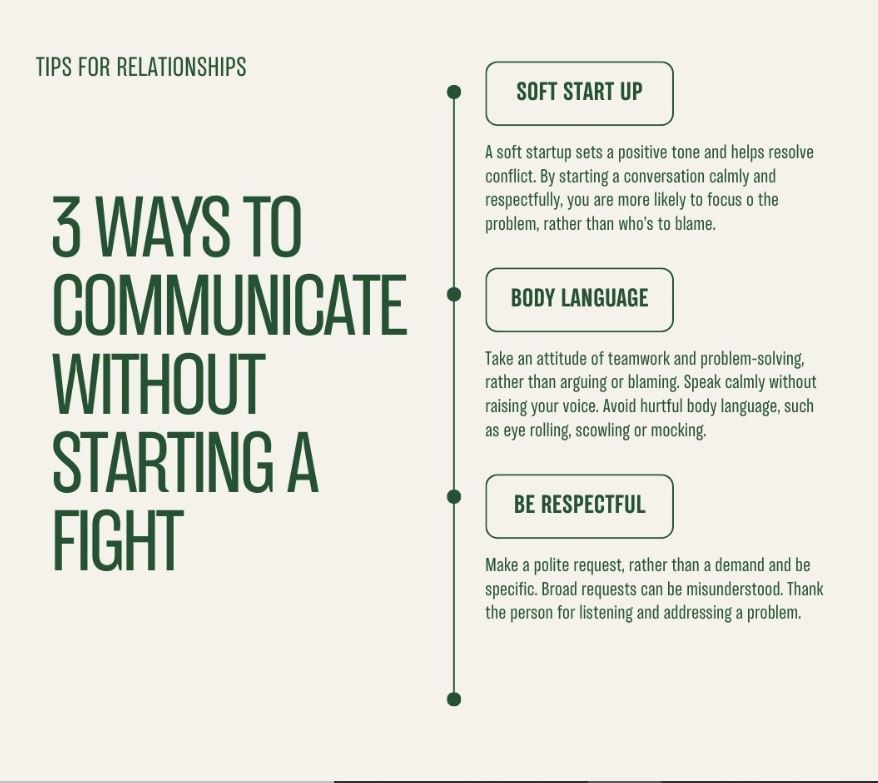
Start with appreciation, then express your concern gently. The best communication strategies for couples in this instance include replacing “you always” or “you never” with specific observations: “I felt hurt when…” Focus on the behavior, not the person. Softness makes honesty easier to receive.
You can also ask permission: “Is it okay if I share something that’s been on my mind?” This reduces defensiveness and creates a collaborative tone.
14. What are the biggest communication mistakes couples make?
Frequent errors include defensiveness, interrupting, assuming intentions, and invalidating feelings. These habits create distance and frustration. Healthy communication involves curiosity, patience, and responsibility. Small shifts transform the tone of conversations.
Awareness is the first step. Once you identify recurring mistakes, you can replace them with better habits, such as pausing before reacting or asking questions instead of assuming motives.
15. Does texting help or hurt communication in relationships?
Texting is great for updates and affection, but risky for emotional conversations. Tone often gets misinterpreted, leading to unnecessary conflict. Save sensitive topics for in-person or voice discussions. Texting should supplement, not replace, real connection.

A simple guideline is: Use texting for logistics, not emotional problem-solving. This reduces miscommunication and keeps important conversations grounded.
16. How do I know if poor communication is a dealbreaker?
If your partner refuses to listen, dismisses your feelings, or blames you for expressing needs, these are warning signs. Dealbreakers emerge when effort is one-sided over a long period. Healthy relationships require mutual willingness, not perfection. Effort is the measure of potential.
It’s also important to notice whether communication issues improve after honest dialogue. If nothing changes despite repeated attempts, that may indicate deeper incompatibilities.
17. How do attachment styles affect communication?
Anxious partners may seek reassurance, while avoidant partners need space. This can create mismatched rhythms that feel like conflict but are actually patterns. Understanding your attachment style helps you communicate from awareness rather than reaction. Knowledge reduces misunderstanding.
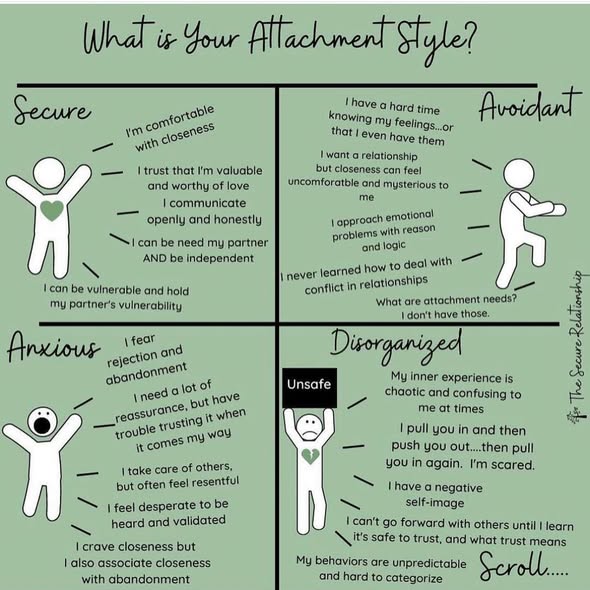
You don’t need to change your attachment style overnight. Just being aware of it helps you respond with intention instead of habit.
18. How do I improve communication if my partner refuses therapy?
Start by improving your own communication habits. The best communication strategies for couples include listening more, reacting less, and choosing gentle language. Lead by example; change often influences change. You can also use books, online resources, or workshops individually. Growth doesn’t have to be mutual to begin.
If things start improving on your end, your partner may eventually become more receptive. Sometimes people need to see positive change before they’re ready to join in.
19. How do you rebuild trust after communication breaks down?
Trust is rebuilt through consistent honesty, reliability, and openness. Show through action, not promises, that the pattern is changing. Keep conversations transparent and avoid repeating old habits. Small, consistent steps carry the most weight.
Be patient; trust rarely returns quickly. Instead of demanding reassurance, demonstrate steady reliability and let your actions speak.
20. Can couples recover from years of poor communication?
Yes, research shows that couples can dramatically improve with patience, effort, and new communication skills. The key is the willingness on both sides to break old patterns and use the best communication strategies for couples. Start with small daily habits like listening without interrupting. Change is almost always possible when two people want it.
Even long-standing problems can shift when both partners commit to healthier habits. It’s not about erasing the past but building a new communication rhythm moving forward.
How to Apologize Correctly: A Man’s Guide to Being Heard

Most men don’t struggle to say sorry because they don’t care, but because they never learned how to express regret without losing dignity. They do not know how to apologize correctly. It is not that they view saying sorry as a weakness, but rather most take it as admitting a lack on their end,
The Psychology of Ghosting: Why People Disappear and How to Heal

You’ve been texting someone, sharing everything from jokes, plans floated, conversations flowing, and then silence. Messages go unanswered. Invitations go unanswered. The chat bubble becomes a void. That’s ghosting. It feels like you’re suddenly talking to thin air.

But here’s what’s important and what you should keep in mind. Ghosting isn’t about your worth, but rather it’s about a breakdown in communication, emotional capacity, and connection. In this article, we’ll explore the psychology behind ghosting, what it says about the person who vanished, and the emotional ripple it creates for the person left behind.
And then we’ll talk about how to heal, reclaim your story, and move forward with more clarity and emotional strength.
What Does Ghosting Really Mean?
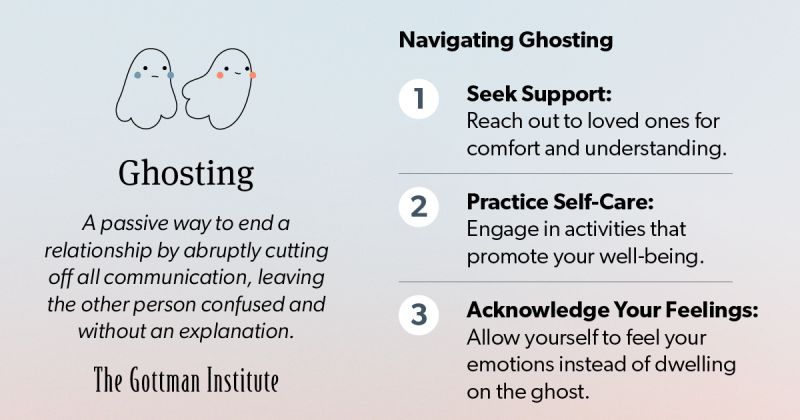
Ghosting is the act of ending a romantic, friendship, or other relationship by disappearing. No warning. No explanation. Just silence. When we speak of the “psychology behind ghosting in relationships,” what we’re referring to is why the person who ghosts chooses this path, and what underlying emotional or relational patterns drive that decision. The real question shared by many is: Why do people ghost instead of talking it through?

; https://doi.org/10.3390/encyclopedia4010004 by Lateefa Rashed Daraj 1, Mariam Rashid Buhejji 1 ,Gretta Perlmutter 2, Haitham Jahrami 1,3,*ORCID and Mary V. Seeman 4ORCID
This modern dating behavior, like others, has become increasingly common in the digital-dating and social media age. It’s not limited to dating apps. It can happen in friendships, group chats, and even professional setups. Research indicates that ghosting spans multiple relational contexts.
The Psychology Behind Ghosting
Avoidant Attachment & Fear of Vulnerability
Some people have what psychologists call an avoidant attachment style — meaning, when emotional closeness grows, they feel threatened by it. To them, the more intimate the connection, the more their self-protection mechanisms trigger. Ghosting can be a way of withdrawing when things feel too real. A 2024 study found a significant negative correlation between ghosting experiences and anxious attachment among youth.
The Fear of Confrontation
Let’s be honest, ending relationships hurts. Having the conversation, witnessing another person’s hurt, and accepting their reaction takes energy. For some, ghosting is the “easy exit.” They’d rather vanish than explain. The result: someone left with questions and no closure.
Digital Detachment & Option Overload
In the age of dating apps, social media, and constant messaging, relationships can feel disposable. One commentary on “ghosting in the digital era” notes that technologies create anonymity and reduce emotional accountability, making ghosting more prevalent.
Cognitive Dissonance & Self-Justification
When someone ghosts, they often tell themselves stories to justify their silence: “It’ll be less painful this way,” or “They’ll get over it.” Over time, that justification becomes comfortable, reinforcing the avoidance pattern. A recent review mentions that traits like emotional immaturity and dark-triad personality factors correlate with higher ghosting intent.
Emotional Immaturity & Empathy Deficit
Ghosting isn’t always about cruelty; sometimes it’s about a lack of skills. The ability to communicate, to show empathy, and to face discomfort are all learned skills. Without them, silence becomes the default exit. The same review noted that ghosting can be seen as “social rejection without explanation, but not without care.”
The Emotional Effects of Ghosting
Being ghosted is more than awkward, as it feels like you’ve been dropped into limbo. You’re left with questions: Why? What did I do? Is it me? That uncertainty is part of what makes ghosting especially hurtful.

Psychologists describe this as a kind of “ambiguous loss” when the ending isn’t clear, you’re unable to properly grieve, thus prolonging pain.
In a study of 626 adults, people who experienced ghosting (or “breadcrumbing”) reported lower life satisfaction, more loneliness, and a greater sense of helplessness.
And the pain can linger: one piece of research suggests those who are ghosted may be more likely to ghost others, indicating that the emotional ripple extends beyond one experience.
What Ghosting Reveals About the Ghoster
It’s tempting (and human) to look at yourself and wonder, “What did I do wrong?” But it’s just as valid to ask: “What was going on for them?” You do not have to excuse the behavior, but it helps to understand it.

Ghosting often reveals:
- Difficulty in tolerating emotional discomfort.
- A pattern of withdrawal rather than engagement.
- Possible moral disengagement (i.e., “I’ll just vanish rather than face the fallout”).
- In some cases, traits associated with manipulation, although it is not always For instance, one review notes that people with “dark triad” traits are more likely to use ghosting as a preferred exit strategy.
Knowing this doesn’t make you feel better in the moment, but it shifts some of the weight off you. Their choices reflect their capacity, not your values.
How to Heal After Being Ghosted

Healing is not linear, and there’s no magic fix. But there are practical steps you can take to reclaim your emotional well-being. Healing from ghosting begins by understanding that someone’s silence says more about them than about you. Here are strategies rooted in psychology and self-care:
1. Validate Your Feelings
Your pain is real. Your confusion is valid. Don’t let yourself minimize what you’re going through. Start by acknowledging the hurt, the self-doubt, the questions. Name them. Recognize that what you’re experiencing is grief for the loss of connection and closure. Journaling or speaking with a therapist can help you process this pain instead of suppressing it.
2. Detach from the Narrative
You may keep replaying the last message, the last date, the “what ifs”, and that’s normal. But prolonged cognitive cycles keep you stuck. Clinical psychologist Dr. Ramani Durvasula explains, “Ghosting reflects a lack of communication skills, not your worth.” This shift helps restore self-esteem and detaches your identity from the ghoster’s behavior. Recognise that you may never get the answer, and that’s okay. The closure you seek can come from within.
3. Rebuild Confidence & Trust
Ghosting can hit self-esteem hard. So rebuild it deliberately. Practice self-care, reconnect with friends, and engage in things that make you feel alive. Remind yourself that one person’s silence isn’t a measure of your worth.
Take time to reconnect with yourself. After ghosting, self-neglect often follows. Focus on restoring routines that bring comfort, exercise, creative projects, or spending time with supportive friends. According to a 2022 Journal of Positive Psychology study, small acts of self-compassion accelerate emotional recovery after relational loss.
4. Internal Closure: Your Version
If you didn’t get “I’m sorry, this isn’t working,” then write your own ending. A letter you don’t send, a journal entry, a symbolic act of release. You’re permitting yourself to move on.
Seeking explanations from someone who has already withdrawn can reopen wounds. Closure is something you create, not something you wait to receive. Write down what you wish you could say and release it privately.
5. Set Emotional Boundaries for Future Relationships
One ghosting experience can become a teacher. Use it to clarify what you will and won’t tolerate. Establish signs early: “When X happens, that’s a red flag.” Honesty and communication aren’t optional. Unfollow, mute, or block if necessary. Protecting your mental space isn’t petty but a vital part of regaining control over your emotional energy.
When You’re the One Who Ghosted
Yes, this section is for you. If you’ve ever ghosted someone, you know there’s a part of you that regrets the silence. This isn’t about guilt-shaming, but about accountability and growth.
- Reflect: Why didn’t you speak up? What were you afraid of?
- Own it: If possible, a simple apology matters (“I’m sorry I vanished; I should have handled it differently.”)
- Learn: Communication is a muscle. Invest in it. Avoid avoidance.
- Change: Next time, choose a different path — even if it’s awkward. Even if you fear the reaction.
By doing so, you’re cultivating emotional maturity and respect for others and for yourself.
Preventing Ghosting in Future Relationships
The best way to heal is to also evolve. Let this experience inform how you show up moving forward.
- Communicate early and clearly. If something’s off, say it.
- Honor emotional reality. One of the most heroic things you can do is say “I don’t feel this working” — and then follow through.
- Recognize soft signs of fading. If things become inconsistent, ask the question. Don’t wait for the silence.
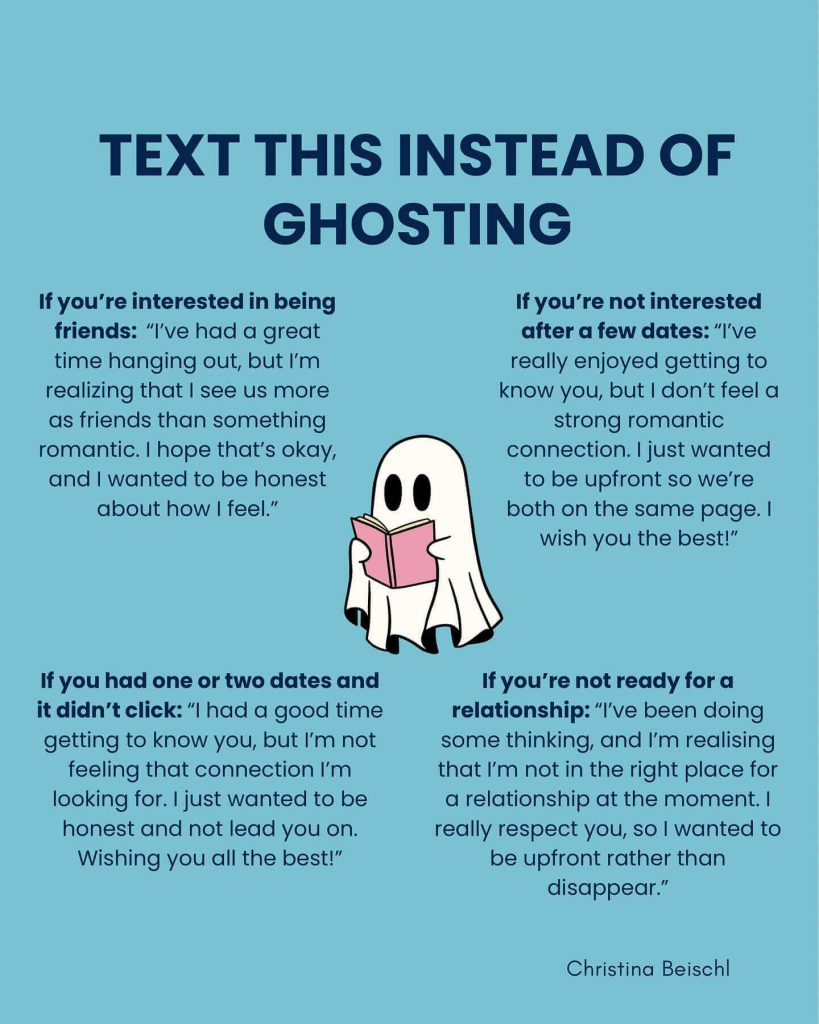
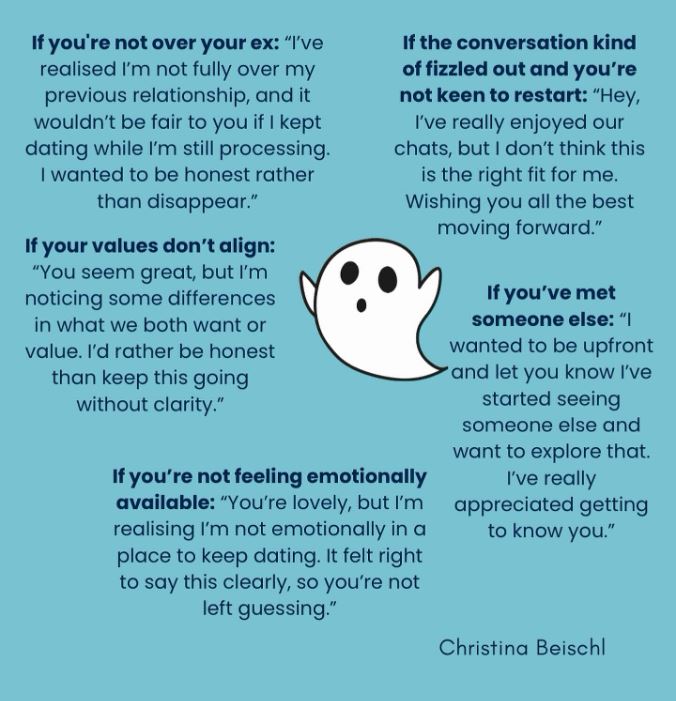
- Use scripts if needed.
“I’ve enjoyed getting to know you, but I don’t feel the connection I hoped for.”
That’s okay. Short. Honest. Respectful.
Turning Silence into Self-Understanding
Ghosting may feel like a rejection of you, but it is more accurately a reflection of someone’s limitations. Their silence doesn’t diminish your worth. Your healing doesn’t depend on their response.
You’ve read about the psychology behind it, felt the emotional impact, and now you have a roadmap to heal. Use this knowledge. Choose growth. Let this experience sharpen your emotional compass rather than dull it.
Next step? Maybe read: “How to Apologize Correctly, A Man’s Guide to Being Heard.”
You deserve respect. You deserve clarity. And above all, you deserve the courage it takes to show up not as a ghost, but as the person who knows their value.
15 Modern Dating Terms Unmasking What Love Looks Like Today

Once upon a time, dating language was simple. You were “dating,” “going steady,” “engaged,” or “married.” If something ended, you “broke up.” Today, thanks to a slew of modern dating terms, the dating scene looks nothing like that


