



















You’ve been texting someone, sharing everything from jokes, plans floated, conversations flowing, and then silence. Messages go unanswered. Invitations go unanswered. The chat bubble becomes a void. That’s ghosting. It feels like you’re suddenly talking to thin air.

But here’s what’s important and what you should keep in mind. Ghosting isn’t about your worth, but rather it’s about a breakdown in communication, emotional capacity, and connection. In this article, we’ll explore the psychology behind ghosting, what it says about the person who vanished, and the emotional ripple it creates for the person left behind.
And then we’ll talk about how to heal, reclaim your story, and move forward with more clarity and emotional strength.
What Does Ghosting Really Mean?
Ghosting is the act of ending a romantic, friendship, or other relationship by disappearing. No warning. No explanation. Just silence. When we speak of the “psychology behind ghosting in relationships,” what we’re referring to is why the person who ghosts chooses this path, and what underlying emotional or relational patterns drive that decision. The real question shared by many is: Why do people ghost instead of talking it through?

; https://doi.org/10.3390/encyclopedia4010004 by Lateefa Rashed Daraj 1, Mariam Rashid Buhejji 1 ,Gretta Perlmutter 2, Haitham Jahrami 1,3,*ORCID and Mary V. Seeman 4ORCID
This modern dating behavior, like others, has become increasingly common in the digital-dating and social media age. It’s not limited to dating apps. It can happen in friendships, group chats, and even professional setups. Research indicates that ghosting spans multiple relational contexts.
The Psychology Behind Ghosting
Avoidant Attachment & Fear of Vulnerability
Some people have what psychologists call an avoidant attachment style — meaning, when emotional closeness grows, they feel threatened by it. To them, the more intimate the connection, the more their self-protection mechanisms trigger. Ghosting can be a way of withdrawing when things feel too real. A 2024 study found a significant negative correlation between ghosting experiences and anxious attachment among youth.
The Fear of Confrontation
Let’s be honest, ending relationships hurts. Having the conversation, witnessing another person’s hurt, and accepting their reaction takes energy. For some, ghosting is the “easy exit.” They’d rather vanish than explain. The result: someone left with questions and no closure.
Digital Detachment & Option Overload
In the age of dating apps, social media, and constant messaging, relationships can feel disposable. One commentary on “ghosting in the digital era” notes that technologies create anonymity and reduce emotional accountability, making ghosting more prevalent.
Cognitive Dissonance & Self-Justification
When someone ghosts, they often tell themselves stories to justify their silence: “It’ll be less painful this way,” or “They’ll get over it.” Over time, that justification becomes comfortable, reinforcing the avoidance pattern. A recent review mentions that traits like emotional immaturity and dark-triad personality factors correlate with higher ghosting intent.
Emotional Immaturity & Empathy Deficit
Ghosting isn’t always about cruelty; sometimes it’s about a lack of skills. The ability to communicate, to show empathy, and to face discomfort are all learned skills. Without them, silence becomes the default exit. The same review noted that ghosting can be seen as “social rejection without explanation, but not without care.”
The Emotional Effects of Ghosting
Being ghosted is more than awkward, as it feels like you’ve been dropped into limbo. You’re left with questions: Why? What did I do? Is it me? That uncertainty is part of what makes ghosting especially hurtful.

Psychologists describe this as a kind of “ambiguous loss” when the ending isn’t clear, you’re unable to properly grieve, thus prolonging pain.
In a study of 626 adults, people who experienced ghosting (or “breadcrumbing”) reported lower life satisfaction, more loneliness, and a greater sense of helplessness.
And the pain can linger: one piece of research suggests those who are ghosted may be more likely to ghost others, indicating that the emotional ripple extends beyond one experience.
What Ghosting Reveals About the Ghoster
It’s tempting (and human) to look at yourself and wonder, “What did I do wrong?” But it’s just as valid to ask: “What was going on for them?” You do not have to excuse the behavior, but it helps to understand it.

Ghosting often reveals:
- Difficulty in tolerating emotional discomfort.
- A pattern of withdrawal rather than engagement.
- Possible moral disengagement (i.e., “I’ll just vanish rather than face the fallout”).
- In some cases, traits associated with manipulation, although it is not always For instance, one review notes that people with “dark triad” traits are more likely to use ghosting as a preferred exit strategy.
Knowing this doesn’t make you feel better in the moment, but it shifts some of the weight off you. Their choices reflect their capacity, not your values.
How to Heal After Being Ghosted

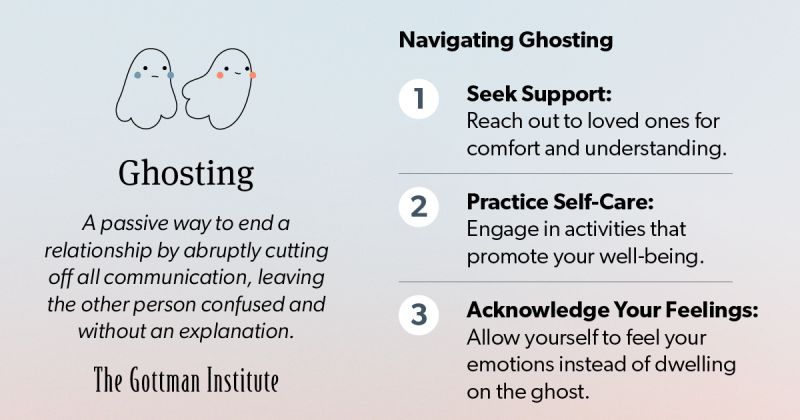
Healing is not linear, and there’s no magic fix. But there are practical steps you can take to reclaim your emotional well-being. Healing from ghosting begins by understanding that someone’s silence says more about them than about you. Here are strategies rooted in psychology and self-care:
1. Validate Your Feelings
Your pain is real. Your confusion is valid. Don’t let yourself minimize what you’re going through. Start by acknowledging the hurt, the self-doubt, the questions. Name them. Recognize that what you’re experiencing is grief for the loss of connection and closure. Journaling or speaking with a therapist can help you process this pain instead of suppressing it.
2. Detach from the Narrative
You may keep replaying the last message, the last date, the “what ifs”, and that’s normal. But prolonged cognitive cycles keep you stuck. Clinical psychologist Dr. Ramani Durvasula explains, “Ghosting reflects a lack of communication skills, not your worth.” This shift helps restore self-esteem and detaches your identity from the ghoster’s behavior. Recognise that you may never get the answer, and that’s okay. The closure you seek can come from within.
3. Rebuild Confidence & Trust
Ghosting can hit self-esteem hard. So rebuild it deliberately. Practice self-care, reconnect with friends, and engage in things that make you feel alive. Remind yourself that one person’s silence isn’t a measure of your worth.
Take time to reconnect with yourself. After ghosting, self-neglect often follows. Focus on restoring routines that bring comfort, exercise, creative projects, or spending time with supportive friends. According to a 2022 Journal of Positive Psychology study, small acts of self-compassion accelerate emotional recovery after relational loss.
4. Internal Closure: Your Version
If you didn’t get “I’m sorry, this isn’t working,” then write your own ending. A letter you don’t send, a journal entry, a symbolic act of release. You’re permitting yourself to move on.
Seeking explanations from someone who has already withdrawn can reopen wounds. Closure is something you create, not something you wait to receive. Write down what you wish you could say and release it privately.
5. Set Emotional Boundaries for Future Relationships
One ghosting experience can become a teacher. Use it to clarify what you will and won’t tolerate. Establish signs early: “When X happens, that’s a red flag.” Honesty and communication aren’t optional. Unfollow, mute, or block if necessary. Protecting your mental space isn’t petty but a vital part of regaining control over your emotional energy.
When You’re the One Who Ghosted
Yes, this section is for you. If you’ve ever ghosted someone, you know there’s a part of you that regrets the silence. This isn’t about guilt-shaming, but about accountability and growth.
- Reflect: Why didn’t you speak up? What were you afraid of?
- Own it: If possible, a simple apology matters (“I’m sorry I vanished; I should have handled it differently.”)
- Learn: Communication is a muscle. Invest in it. Avoid avoidance.
- Change: Next time, choose a different path — even if it’s awkward. Even if you fear the reaction.
By doing so, you’re cultivating emotional maturity and respect for others and for yourself.
Preventing Ghosting in Future Relationships
The best way to heal is to also evolve. Let this experience inform how you show up moving forward.
- Communicate early and clearly. If something’s off, say it.
- Honor emotional reality. One of the most heroic things you can do is say “I don’t feel this working” — and then follow through.
- Recognize soft signs of fading. If things become inconsistent, ask the question. Don’t wait for the silence.
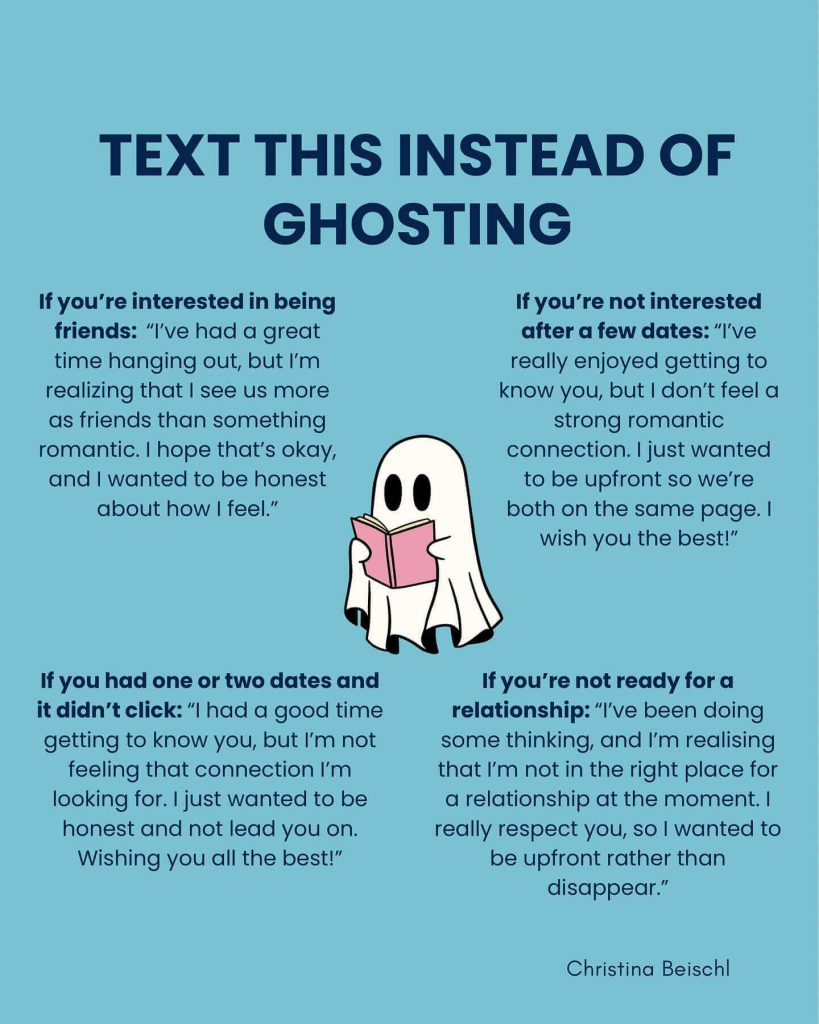
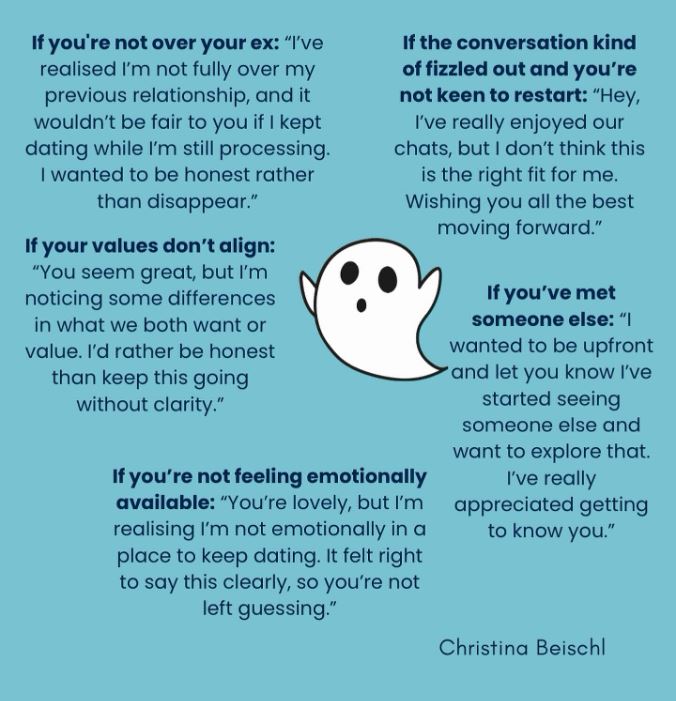
- Use scripts if needed.
“I’ve enjoyed getting to know you, but I don’t feel the connection I hoped for.”
That’s okay. Short. Honest. Respectful.
Turning Silence into Self-Understanding
Ghosting may feel like a rejection of you, but it is more accurately a reflection of someone’s limitations. Their silence doesn’t diminish your worth. Your healing doesn’t depend on their response.
You’ve read about the psychology behind it, felt the emotional impact, and now you have a roadmap to heal. Use this knowledge. Choose growth. Let this experience sharpen your emotional compass rather than dull it.
Next step? Maybe read: “How to Apologize Correctly, A Man’s Guide to Being Heard.”
You deserve respect. You deserve clarity. And above all, you deserve the courage it takes to show up not as a ghost, but as the person who knows their value.


