


















The idea of love languages has become one of the most widely discussed frameworks in modern relationship conversations. From dating tips and marriage therapy to social media debates and self-help books, the concept is often seen as a key to understanding why people feel loved or painfully unseen, even when effort is made.
At its core, love languages describe how people tend to interpret emotional care and connection differently. The idea gained popularity because it gave language to something many people experience intuitively: love can be there, but still feel absent if it is expressed in ways that don’t resonate.
This article examines the foundation of the concept itself, its origins, meaning, scientific critiques, limitations, and wider uses beyond romance. Understanding this framework at that level helps readers use it more thoughtfully, without turning it into a strict rulebook.
Ultimately, love languages are not about perfect execution. They focus on emotional communication, awareness, and the ongoing effort to understand how connection is received, not just how it is intended.
Origins & Evolution of the Love Languages Concept
The concept of love languages was introduced in 1992 by Dr. Gary Chapman, a marriage counselor and pastor, through his book The Five Love Languages. Chapman developed the idea based on patterns he observed while working with couples who felt disconnected despite genuine affection and commitment.
In his counseling work, Chapman noticed a recurring dynamic: partners often expressed love in ways that felt meaningful to them, yet those same gestures failed to meet their partner’s emotional needs. Over time, he categorized these expressions into five broad patterns, which he framed as “languages.”
Originally, the framework was rooted in marital communication, particularly within heterosexual, Christian couples seeking relationship guidance. However, the simplicity and relatability of the concept allowed it to spread far beyond that context. The book was translated into multiple languages, adapted for different audiences (including singles, parents, and children), and absorbed into mainstream culture.
The global appeal of love languages lies in their accessibility. They offered people a vocabulary for emotional experiences that often felt confusing or invalidated. Instead of framing relationship dissatisfaction as failure or incompatibility, the concept reframed it as a difference in emotional expression, a shift that felt hopeful rather than condemning.
Core Concepts Explained
The foundational idea behind love languages is simple: people differ in how they experience emotional connection and care. While most individuals appreciate affection in many forms, certain expressions tend to feel more impactful, reassuring, or meaningful than others.
The term “language” functions as a metaphor. Just as spoken languages require translation to be understood, emotional expressions may require awareness and adjustment to be fully received. Love, in this framework, is not just about intention—it is about interpretation.
Importantly, this does not suggest that people are incapable of understanding other expressions of love. Rather, it highlights that emotional fulfillment is shaped by perception, past experiences, and personal values.
What the Five Categories Represent
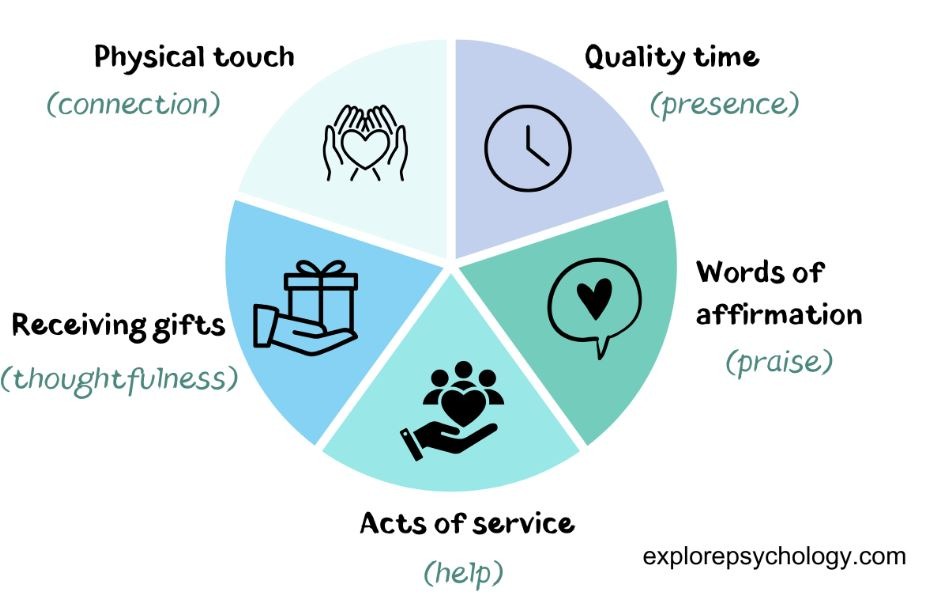
The five love languages are best understood as themes of emotional emphasis, not fixed personality traits or rigid emotional identities. They describe how love is most easily felt and recognized, rather than defining what love objectively is. When used thoughtfully, these categories help illuminate emotional patterns without reducing people to labels.
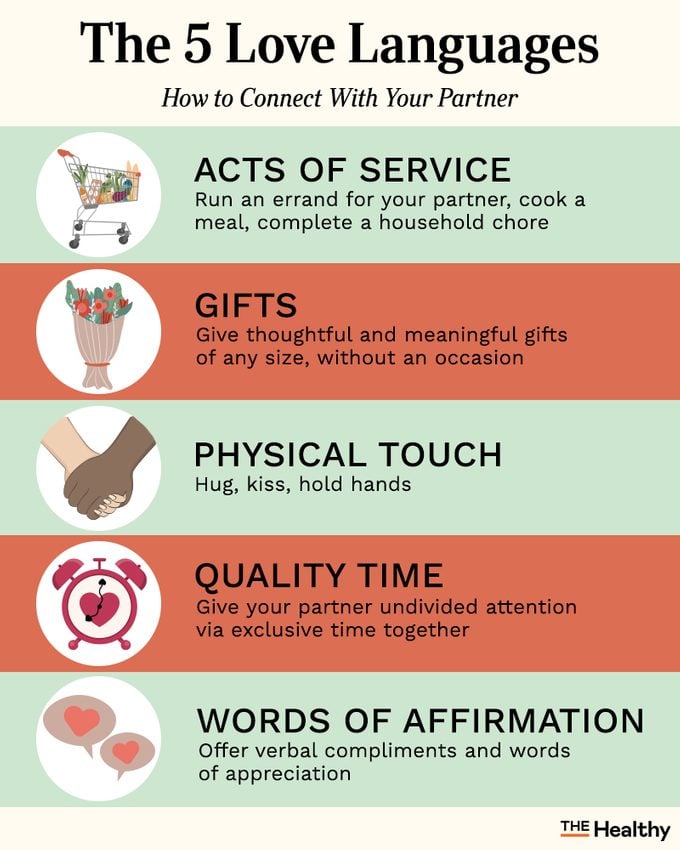
Rather than asking, “What is my love language forever?” a more accurate and helpful question is, “What tends to make me feel most emotionally seen and valued, especially in close relationships?”
Words of Affirmation: Love Experienced Through Language
Words of Affirmation emphasize verbal expressions of care, appreciation, and emotional reassurance. For people who resonate with this category, spoken or written words carry significant emotional weight. Language becomes a primary way love is recognized and internalized.

This does not mean that praise or compliments alone sustain connection. Instead, verbal affirmation functions as emotional validation. Hearing appreciation, encouragement, or understanding helps these individuals feel emotionally secure and acknowledged.
Psychologically, this preference is often linked to the human need for recognition and emotional validation. When affirming words are absent, or when criticism outweighs encouragement, people who value this category may feel unseen, even when other forms of care are present.
Quality Time: Love Felt Through Presence and Attention
Quality Time centers on shared presence, focused attention, and emotional availability. For those who value this category, love is experienced most deeply through moments of undivided attention rather than through proximity alone.
The emphasis here is not on quantity of time, but on emotional engagement. Feeling listened to, included, and mentally present with someone creates a sense of connection that transcends activity or setting.

From a psychological standpoint, Quality Time reflects the importance of attunement—the experience of being emotionally met in the moment. Distraction, emotional withdrawal, or habitual multitasking can feel particularly distancing for individuals who prioritize this form of connection.
Receiving Gifts: Love Expressed Through Symbolism
Receiving Gifts focuses on symbolism, thoughtfulness, and tangible representations of care. For people aligned with this category, gifts are meaningful not because of their monetary value, but because they serve as physical reminders of emotional presence.
A gift symbolizes that someone was remembered, considered, and valued—even in their absence. This category is often misunderstood as materialistic, but at its core, it is about meaning and intentionality rather than consumption.

Psychologically, tangible symbols can anchor emotional experiences. Objects associated with care can evoke feelings of connection long after an interaction has ended, reinforcing emotional bonds through memory and association.
Acts of Service: Love Demonstrated Through Reliability
Acts of Service highlight helpfulness, responsibility, and follow-through. For those who resonate with this category, love is most clearly expressed through actions that reduce stress, provide support, or demonstrate dependability.
This preference often reflects a deep appreciation for consistency and effort. When someone takes initiative, keeps commitments, or offers practical assistance, it signals care in a way that words alone may not.

From a relational perspective, Acts of Service connect strongly to trust. Reliability fosters emotional safety, and repeated follow-through communicates that someone can be counted on. It is an essential element in long-term relational stability.
Physical Touch: Love Felt Through Embodied Connection
Physical Touch emphasizes closeness, warmth, and embodied reassurance. For individuals who value this category, physical presence communicates safety, comfort, and emotional closeness in ways that language cannot fully replicate.
This does not imply constant contact or sexual expression. Instead, touch functions as a form of nonverbal emotional communication—one that conveys connection, grounding, and reassurance.

Psychological research highlights the role of touch in emotional regulation and bonding. Appropriate, consensual physical contact can reduce stress and reinforce feelings of security, making it a powerful medium for emotional connection.
Love Languages as Emotional Experiences, Not Definitions
Importantly, these categories describe how love feels, not what love is in absolute terms. They reflect patterns of emotional recognition shaped by personal history, relational experiences, and cultural context.
Most people resonate with more than one category, and preferences often shift over time. Stress, life transitions, or changes in relationship dynamics can alter how love is most deeply felt in a given moment.
Understanding the five love languages at this level allows them to function as interpretive tools rather than prescriptive rules. They help explain emotional differences without confining people to fixed identities, encouraging flexibility, curiosity, and deeper emotional awareness.
Common Misunderstandings About Love Languages
Despite their popularity, love languages are often misunderstood in ways that limit their usefulness or distort their intent. Clarifying these misconceptions is essential for using the framework in a healthy, constructive way.
One of the most common misunderstandings is the belief that people have only one true love language. In reality, emotional preferences are rarely singular or static. Most people resonate with multiple categories to varying degrees, and these preferences can shift depending on context, relationship stage, or life circumstances. What feels most meaningful during a period of stress, for example, may differ from what feels meaningful during stability or growth.
Another misconception is treating love languages as fixed personality traits. Unlike temperament or attachment patterns, love languages were never intended to define a person’s identity. They describe tendencies in emotional recognition, not immutable aspects of identity. When treated as fixed labels, they can unintentionally restrict emotional growth or discourage adaptability.
Love languages are also frequently misunderstood as transactional formulas. This refers to the idea that performing a specific action guarantees emotional fulfillment. This mindset overlooks the relational reality that love is shaped by intention, context, and emotional presence. An act that aligns with someone’s preference may still fall flat if it feels obligatory, insincere, or disconnected from genuine care.
Finally, many people assume that knowing their own love language absolves them from learning others’. In practice, the framework works best when it encourages mutual curiosity rather than self-centered justification. Love languages are meant to open dialogue, not end it.
What Does Science Say About Love Languages?
Love languages are widely embraced in popular culture, but their scientific support is more complex than their popularity suggests. While many people find the framework helpful, relationship psychology research has produced mixed findings regarding its effectiveness as a predictor of relationship satisfaction.
Rather than confirming love languages as a proven psychological theory, research points to a more nuanced conclusion: the concept works best as a communication tool, not a scientific rulebook.
Are Love Languages Scientifically Proven?
One of the most common questions people ask is whether love languages are backed by science. To date, research has not consistently shown that identifying or matching a partner’s love language directly leads to higher relationship satisfaction.
Several studies examining couples’ reported love languages and relational outcomes found no reliable evidence that partners who share the same primary love language are happier or more emotionally connected than those who do not. This challenges the popular belief that discovering and aligning love languages is a guaranteed solution to relationship struggles.
Psychologists emphasize that while love languages may describe preferences, they do not function as fixed psychological traits. Emotional needs are fluid, shaped by context, stress, life stage, and relational history. As a result, relying too heavily on the idea of a single dominant love language can oversimplify how people actually experience love.
Relationship Research on Love Languages and Satisfaction
Research in relationship psychology suggests that how love is delivered matters less than whether it is perceived as caring and responsive.
Studies highlight that relationship satisfaction is more strongly associated with emotional responsiveness, the feeling that a partner listens, understands, and adapts, than with expressing love in a specific category. Partners who feel emotionally attuned to each other tend to report stronger bonds, even when their expressions of love do not perfectly align.
For example, Bunt and Hazelwood (2017) found that relationship satisfaction was linked more closely to effort and self-regulation than to shared love language preferences. Partners who intentionally adjusted their behavior to meet each other’s needs reported greater emotional closeness, regardless of whether those behaviors fit neatly into one love language.
This suggests that love languages are most effective when paired with willingness, curiosity, and emotional flexibility.
Do Love Languages Oversimplify Emotional Expression?
A major critique from psychologists is that the love languages framework can oversimplify emotional complexity.
Human relationships are influenced by a wide range of psychological and social factors, including attachment styles, communication skills, mental health, stress levels, trauma history, and power dynamics. Love languages alone cannot fully account for these influences.
For instance, a strong desire for reassurance or physical closeness may stem from anxiety or insecurity rather than a stable love language preference. When emotional needs are reduced to categories without context, deeper relational issues can be overlooked.
Researchers also note that emotional experiences often overlap. Egbert and Polk’s (2006) analysis found that while the five love languages could be identified as distinct factors, there was significant overlap, particularly between Words of Affirmation and Quality Time. This reinforces the idea that love languages are descriptive patterns, not rigid psychological constructs.
Cultural and Inclusivity Critiques of Love Languages
Another important critique centers on the cultural origins of the love languages model.
Gary Chapman developed the framework within a specific context, working primarily with heterosexual, married, Christian couples in Western settings. Critics argue that this background influences the assumptions embedded in the model, potentially limiting its relevance across diverse cultures, identities, and relationship structures.
Research suggests that cultural norms significantly shape how affection is expressed and interpreted. What counts as meaningful quality time, appropriate physical touch, or thoughtful gift-giving varies widely across cultures and social environments. Applying the same framework universally risks misunderstanding or mislabeling emotional needs that are culturally rooted.
Additionally, some scholars point out that early love language examples reinforce traditional gender roles, which may not reflect modern relationship dynamics. These limitations highlight the importance of adapting the framework rather than applying it rigidly.
Can Love Languages Be Harmful When Misused?
Psychologists caution that love languages can be misused when treated as obligations or justifications rather than tools for understanding.
Common misapplications include using love languages to excuse emotional neglect, shift responsibility onto one partner, or pressure someone into behaviors that violate their boundaries. Statements like “this is my love language” can become problematic when they override consent, emotional safety, or mutual respect.
In more concerning cases, rigid interpretations of love languages may discourage people from addressing deeper relational issues or recognizing unhealthy dynamics. Experts emphasize that no framework should replace honest communication, accountability, or professional support when needed.
A Balanced Psychological View of Love Languages
Despite these critiques, many psychologists acknowledge that love languages retain value when used flexibly and thoughtfully. Research cited in the provided articles indicates that learning about love languages can increase empathy and self-awareness—not because the model is scientifically definitive, but because it encourages reflection and dialogue.
When approached as a shared vocabulary rather than a rulebook, love languages can help people articulate emotional needs, recognize differences, and approach relationships with greater intention.
The scientific takeaway is clear: love languages are not a proven formula for relationship success, but they can support healthier communication when paired with emotional intelligence, adaptability, and respect for individual and cultural differences.
Why the Concept Still Matters
Even with its limitations, the love languages framework continues to resonate because it encourages people to pay attention to themselves and to others.
As a metaphor, it invites reflection: What makes me feel emotionally safe? When do I feel most appreciated? How do I tend to show care? These questions foster empathy and curiosity, two qualities essential for healthy relationships.
Love languages also help normalize differences. Instead of framing unmet needs as selfish or unreasonable, the concept reframes them as variations in emotional wiring. This shift can reduce blame and defensiveness, creating space for more compassionate conversations.
Used thoughtfully, love languages serve as a starting point, not a solution. They open dialogue rather than closing it.
Love Languages Beyond Romantic Relationships
Although often associated with dating and marriage, love languages are not limited to romantic contexts.
Family & Parenting
In families, understanding emotional preferences can deepen bonds between parents and children, siblings, and extended relatives. Children, especially, benefit when caregivers recognize how reassurance and connection are received—not just offered.
Friendships & Workplace Dynamics
Friendships thrive on mutual understanding, and emotional support does not look the same for everyone. Similarly, workplace relationships benefit from recognizing how appreciation and acknowledgment are expressed and received, even within professional boundaries.
Self-Awareness & Personal Growth
Perhaps most overlooked is the role love languages play in self-understanding. Recognizing your own emotional needs can improve boundary-setting, reduce resentment, and enhance emotional intelligence. It helps people articulate needs instead of suppressing them or expecting others to intuitively know.
Limitations & Healthy Usage
Love languages are most helpful when held lightly. Problems arise when they are used as absolute excuses for unmet responsibilities, tools for guilt, or metrics for emotional worth.
They should never replace core relationship skills such as:
- Honest communication
- Active listening
- Mutual respect
- Emotional accountability
Love languages do not fix incompatibility, heal unresolved wounds, or substitute for effort. They simply illuminate how connection is felt.
Love Languages as Awareness, Not Answers
Love languages offer a helpful way to think about emotional connection, but they are not definitive explanations of love itself. At their best, they draw attention to the quiet differences in how people feel seen, valued, and cared for. They are also an excellent guide on how to make someone feel loved. At their worst, when treated as rules or guarantees, they can flatten the complexity of human relationships.
Understanding love languages does not mean mastering a set of behaviors. It means becoming more attentive to emotional signals. These include your own and those of the people you care about. It asks for curiosity rather than certainty, and for responsiveness rather than perfection. Love, after all, is not experienced in categories, but in moments of presence, effort, and understanding.
When used with flexibility, love languages can support healthier conversations and deeper empathy. They remind us that love is not only about intention, but about impact, and that feeling loved often depends on whether emotional needs are noticed and respected.
Ultimately, meaningful connection grows not from applying a framework correctly, but from staying open to change. As people evolve, so do the ways they give and receive love. Approached this way, love languages become what they were always meant to be: a starting point for awareness, not a final answer.


