

















Toxic relationships don’t usually begin with obvious harm. Most unfold quietly, through small patterns that feel familiar, explainable, or even loving at first. Over time, these toxic relationship patterns reshape how safety, closeness, and trust are experienced. Often, without either person realizing what’s happening.
What are Toxic Relationship Patterns?
Toxic relationship patterns are repeated ways of relating that slowly undermine emotional safety, trust, and connection. They often don’t look dramatic or abusive at first. Instead, they show up in small, ongoing moments, like how conflict is handled, whose needs get prioritized, what goes unsaid, and what gets brushed off.
Eventually, toxic relationship behaviors define how safe it feels to speak, to ask, to disagree, or to be fully yourself in the relationship. It’s not about a single bad moment, but about what becomes normal.
This is why many people stay in unhealthy dynamics longer than they intended. The problem isn’t a lack of intelligence or self-respect; it’s that toxic relationship patterns often develop gradually and normalize themselves through repetition. What feels uncomfortable at first becomes “just how things are.”
This article aims to create awareness not to label people as toxic or assign blame. Recognizing toxic relationship patterns helps you see where love is being strained. It will not be a single argument or flaw, but by dynamics that quietly undermine emotional safety and mutual respect.
1. Emotional Invalidation
What This Toxic Relationship Pattern Looks Like
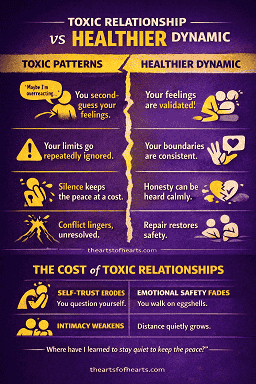
Emotional invalidation rarely sounds cruel. More often, it sounds practical, rational, or even calm. It shows up when your feelings are met with explanations instead of understanding. When you express hurt and are told you’re overthinking, misinterpreting, or taking things too personally.
Over time, you may notice conversations subtly shifting away from how you feel and toward why you shouldn’t feel that way. Your partner might change the subject, offer quick solutions, or compare your emotions to “bigger problems.” None of it looks dramatic. It just feels quietly dismissive.
The result is a pause. A moment where you decide it’s easier not to go there again.
Why It Becomes Toxic Over Time
The emotional cost of invalidation isn’t just feeling unheard. It’s learning to doubt your own internal signals. When your emotions are consistently minimized, you start questioning whether they’re legitimate at all.
This slowly erodes emotional safety. Communication becomes guarded. Intimacy thins out, not because there’s no care, but because vulnerability feels risky. If your inner world keeps getting brushed aside, the connection starts to feel one-sided, like something you offer, but don’t receive back.
How This Pattern Gets Normalized
Emotional invalidation often hides behind good intentions. You may tell yourself your partner is just logical, not emotional. Or that they’re trying to help by keeping things “positive.”
You might also internalize the idea that your emotions are the problem. That if you were stronger, calmer, or more secure, this wouldn’t bother you. Over time, this reframing becomes automatic. You stop expecting emotional presence and call it maturity.
Early Signs People Often Miss
At first, the signs are easy to dismiss:
- You feel slightly embarrassed after sharing something vulnerable
- Your emotions are met with explanations instead of empathy
- You hear “that’s not what I meant” more often than “I understand.”
- You rehearse conversations in your head before bringing them up
None of these feels alarming on their own. Together, they form a pattern.
What a Healthier Dynamic Looks Like
In a healthier dynamic, feelings don’t need to be justified to be respected. Emotional responses are met with curiosity rather than correction. Even when there’s disagreement, there’s space to acknowledge how something landed.
You feel safer expressing yourself because you’re not bracing for dismissal. Your emotions don’t have to be perfect; they just have to be real.
2. Hot–Cold Attachment Cycles
What This Toxic Relationship Pattern Looks Like
Hot–cold dynamics are confusing precisely because they feel so intense. One moment, there’s closeness, affection, and emotional availability. Next, a sudden shift you can’t quite explain. It manifests in the form of distance, delayed replies, or emotional withdrawal.
Often, there’s no clear conflict attached to the change. You’re left scanning recent conversations, wondering what you missed. When the warmth returns, it feels relieving, almost reassuring, until the cycle repeats.
Over time, consistency becomes the exception, not the norm.
Why It Becomes Toxic Over Time
This pattern destabilizes emotional safety. When affection is unpredictable, your nervous system stays alert. You become hyper-aware of tone, timing, and subtle changes in behavior.
The emotional cost is anxiety and an erosion of self-trust. You start adjusting yourself to maintain closeness. Communication becomes cautious. Intimacy becomes tied to uncertainty rather than security.
Connection turns into something you manage, not something you rest in.
How This Pattern Gets Normalized
Hot–cold dynamics are often reframed as chemistry, passion, or complexity. You might tell yourself the highs are worth the lows. That everyone pulls away sometimes. That consistency is boring.
You may also internalize the idea that if you just say the right thing or give enough space, the closeness will stabilize. Over time, you stop questioning the pattern and start adapting to it.
Early Signs People Often Miss
The early cues are subtle:
- You feel relief, not ease, when closeness returns
- You monitor communication patterns more than your own feelings
- You blame stress, timing, or external factors repeatedly
- You feel more anxious than calm when things are “good.”
Individually, these feel manageable. Together, they signal an imbalance.
What a Healthier Dynamic Looks Like
In a healthier dynamic, affection isn’t something you earn or wait for. Emotional presence may fluctuate, but it doesn’t disappear without explanation. Communication remains intact even during distance.
Consistency doesn’t mean intensity; at its core, it’s all about reliability. And reliability is what allows intimacy to deepen without fear.
3. Control Framed as Concern
What This Toxic Relationship Pattern Looks Like
Control framed as concern often begins with care. Questions about where you’re going, who you’re with, or why you made a certain choice. Advice that sounds protective. Preferences expressed as suggestions you feel pressured to follow.
Over time, these moments accumulate. You notice your decisions are increasingly filtered through how they’ll be received. You may start explaining yourself preemptively, just to avoid discomfort.
It doesn’t feel like control. It feels like being managed.
Why It Becomes Toxic Over Time
The emotional cost here is subtle but profound. When autonomy shrinks, self-trust follows. You may begin deferring decisions, doubting your judgment, or feeling uneasy asserting your preferences.
Communication shifts from mutual exchange to quiet compliance. Intimacy suffers because authenticity becomes risky when approval feels conditional. Love starts to feel safe only when you stay within invisible boundaries.
How This Pattern Gets Normalized
Because concern sounds caring, it’s easy to excuse. You may tell yourself they just worry because they love you. That they know better. That compromise is part of a partnership.
Over time, you stop distinguishing between support and supervision. The line blurs, and your independence quietly fades into accommodation.
Early Signs People Often Miss
Early indicators often look reasonable:
- You justify your choices more than before
- You feel guilty for doing things independently
- Your preferences are questioned more than respected
- You adjust plans to avoid tension
Nothing seems overtly wrong. It just feels smaller.
What a Healthier Dynamic Looks Like
In a healthier dynamic, care doesn’t require control. Concern is expressed without pressure. Advice is offered without expectation. Autonomy is seen as a strength, not a threat.
You feel trusted to make your own decisions and supported, not managed, when you do.
4. Blame Shifting Instead of Accountability
What This Toxic Relationship Pattern Looks Like
Blame shifting doesn’t usually sound aggressive. It often shows up as deflection. A concern you raise is quickly rerouted into something you did wrong, or how your tone, timing, or reaction caused the issue.
Over time, conversations start to follow a familiar arc. You bring something up. The focus drifts. Suddenly, you’re explaining yourself rather than addressing the original concern. The problem isn’t denied outright; it’s simply relocated.
Gradually, you learn that speaking up leads to emotional detours rather than resolution.
Why It Becomes Toxic Over Time
The emotional cost of blame shifting is subtle but heavy. Emotional safety weakens when accountability feels one-sided. You begin to second-guess whether your concerns are valid or worth raising.
Communication becomes exhausting. Intimacy thins, not because there’s no care, but because repair never fully happens. When responsibility is always redirected, trust erodes quietly. Issues that don’t resolve linger.
How This Pattern Gets Normalized
Blame shifting often hides behind complexity. You may tell yourself the situation is complicated, or that both of you share responsibility even when the balance feels uneven.
You might also start believing that being “understanding” means letting things go. Over time, accountability is reframed as conflict, and avoidance begins to feel like maturity.
Early Signs People Often Miss
The early cues rarely feel alarming:
- You leave conversations feeling confused or unsettled
- Apologies are followed by explanations rather than change
- You rehearse concerns carefully to avoid pushback
- Issues resurface without ever being fully addressed
Individually, these seem manageable. Together, they signal deflection.
What a Healthier Dynamic Looks Like
In a healthier dynamic, responsibility isn’t a threat. Concerns are met with presence, not redirection. Even when both people contribute to a problem, accountability is shared without defensiveness.
Repair feels possible. Conversations move forward instead of sideways.
5. Conflict Without Repair
What This Toxic Relationship Pattern Looks Like
Every relationship has conflict. What turns conflict toxic is what happens or doesn’t happen afterward. This pattern shows up when disagreements end in silence, avoidance, or emotional distance instead of repair.
You might argue, then move on without resolution. Or things appear fine on the surface, but nothing is actually addressed. Over time, conflict becomes something to survive rather than resolve.
The relationship continues, but something remains unsettled beneath it.
Why It Becomes Toxic Over Time
Unrepaired conflict accumulates. Emotional safety erodes when issues aren’t processed. You may start holding back, knowing that bringing things up won’t lead anywhere.
Communication becomes shallow. Intimacy loses depth because unresolved tension lingers. Even moments of closeness can feel fragile, as though they’re built on something unspoken.
Connection can’t fully relax when repair never arrives.
How This Pattern Gets Normalized
This dynamic is often justified as peacekeeping. You may tell yourself that letting things go is healthier than revisiting them. That not every issue needs to be discussed.
Over time, avoidance is reframed as harmony. But what’s actually happening is emotional backlog. Feelings get stored rather than resolved.
Early Signs People Often Miss
Early indicators often feel reasonable:
- Arguments end without clarity or closure
- You avoid certain topics to keep things calm
- Tension fades but never truly disappears
- The same disagreements resurface months later
Nothing explodes. Things just remain unfinished.
What a Healthier Dynamic Looks Like
In a healthier dynamic, conflict leads somewhere. There’s space to revisit conversations, clarify misunderstandings, and repair emotional impact.
Resolution doesn’t require perfection; you just need willingness. And repair restores safety rather than eroding it.
6. Emotional Withholding as Leverage (Stonewalling)
What This Toxic Relationship Pattern Looks Like
Emotional withholding isn’t always obvious. It can look like silence after a disagreement, reduced affection, or a sudden coolness that follows unmet expectations.
Over time, you notice a pattern: closeness returns when things align, and disappears when they don’t. Emotional availability becomes conditional, though it’s rarely named as such.
Why It Becomes Toxic Over Time
The emotional cost here is uncertainty. Emotional safety weakens when affection feels contingent. You may begin adjusting yourself to avoid withdrawal, even if you can’t quite articulate why.
Self-trust erodes as you prioritize maintaining connection over expressing needs. Communication becomes careful. Intimacy becomes fragile, shaped by fear of disconnection rather than mutual openness.
How This Pattern Gets Normalized
Withholding is often reframed as needing space or time. You may tell yourself that everyone processes differently, or that asking for connection would be pushy.
Over time, emotional absence becomes something you anticipate rather than question. You adapt. You wait. You learn the rhythm.
Early Signs People Often Miss
Early signs often feel subtle:
- Affection decreases after disagreement
- Silence feels emotionally charged rather than neutral
- You feel relief when closeness returns
- You hesitate to express your needs to avoid distance
None of this looks dramatic. It just feels quietly destabilizing.
What a Healthier Dynamic Looks Like
In a healthier dynamic, space doesn’t punish. Emotional availability isn’t used as leverage. Distance, when it happens, is communicated and not imposed.
Affection feels steady. Connection isn’t something you have to earn back.
7. Self-Silencing to Maintain Peace (Walking on Eggshells)
What This Toxic Relationship Pattern Looks Like
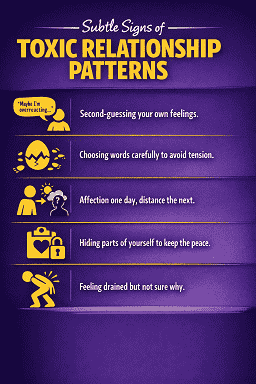
Self-silencing rarely starts as fear. It often starts as consideration. You notice certain topics lead to tension, so you soften your words. Then you shorten them. Eventually, you don’t bring things up at all.
Over time, you become highly attuned to mood shifts. You read the room before you speak. You choose timing carefully. Not because you’re manipulative, but because you want things to stay calm. Conversations feel managed rather than mutual.
The silence isn’t empty. It’s strategic.
Why It Becomes Toxic Over Time
The emotional cost of self-silencing is disconnection from yourself. Emotional safety weakens when honesty feels risky. You begin filtering your thoughts, which slowly erodes self-trust.
Communication becomes narrow. Intimacy suffers because closeness depends on restraint. When peace requires shrinking, the relationship may look stable from the outside—but inside, something essential goes missing.
How This Pattern Gets Normalized
Self-silencing is often framed as maturity. You may tell yourself you’re choosing your battles or being understanding. That speaking up would only make things worse.
Over time, silence becomes a habit. You stop noticing what you’re holding back and start believing this is simply what compromise looks like.
Early Signs People Often Miss
The early cues are quiet:
- You rehearse conversations and still decide not to have them
- You feel relief when you don’t express a need
- You minimize your reactions to avoid friction
- You feel more yourself when you’re alone than together
Nothing dramatic happens. You just get quieter.
What a Healthier Dynamic Looks Like
In a healthier dynamic, honesty doesn’t threaten stability. You can speak without bracing for fallout. Discomfort can be named without escalation.
Peace doesn’t require disappearance. It makes room for presence.
8. Reality Distortion and Gaslighting
What This Toxic Relationship Pattern Looks Like
Reality distortion often shows up in small corrections. A conversation you remember clearly is reframed. Your emotional reaction is questioned. Details shift just enough to leave you uncertain.
Over time, you start double-checking your memory. You ask for reassurance about what happened. Not because you’re forgetful—but because confidence in your perception has been subtly shaken.
The confusion isn’t constant. It comes and goes. Which makes it harder to name.
Why It Becomes Toxic Over Time
The deepest cost of reality distortion is loss of self-trust. Emotional safety collapses when you can’t rely on your own perception. Communication becomes tentative. You begin qualifying your experiences instead of stating them.
Intimacy suffers because vulnerability requires trust—not just in the other person, but in yourself. When your reality is consistently questioned, connection becomes unstable.
How This Pattern Gets Normalized
This pattern is often dismissed as miscommunication. You may tell yourself you misunderstood, or that memory is subjective. That you’re being too emotional.
Over time, you defer to the other person’s version of events. Not because it’s accurate—but because it feels easier than arguing with uncertainty.
Early Signs People Often Miss
Early indicators often feel subtle:
- You say “maybe I’m wrong” before sharing your experience
- You feel confused after conversations rather than clearer
- Your emotions are debated instead of acknowledged
- You rely on external validation to confirm your reality
Nothing feels overtly manipulative. Just destabilizing.
What a Healthier Dynamic Looks Like
In a healthier dynamic, perception isn’t treated as a competition. Differences in memory are acknowledged without dismissal. Emotional experiences are respected, even when interpretations vary.
You feel grounded in your own reality without needing permission.
9. Repeated Boundary Disrespect
What This Toxic Relationship Pattern Looks Like
Boundary disrespect isn’t always loud. Often, it’s persistent. You express a preference or limit, and it’s acknowledged—but not upheld. The same issue resurfaces in slightly different forms.
Over time, you notice your boundaries require repeated explanation. Or they’re treated as flexible, negotiable, or inconvenient. You may stop reinforcing them—not because they no longer matter, but because doing so feels exhausting.
The pattern isn’t one violation. It’s repetition.
Why It Becomes Toxic Over Time
When boundaries aren’t respected, emotional safety weakens. You begin feeling overexposed, resentful, or guarded. Self-trust erodes as you question whether your limits are reasonable.
Communication becomes strained. Intimacy suffers because closeness feels invasive rather than chosen. Love starts to feel like access rather than respect.
How This Pattern Gets Normalized
Boundary crossings are often justified as misunderstandings or personality differences. You may tell yourself you didn’t explain clearly enough. That you’re asking for too much.
Over time, you adjust instead. You give more room. You soften limits. And slowly, your needs take up less space.
Early Signs People Often Miss
The early signs are easy to rationalize:
- You repeat the same boundary multiple times
- You feel guilty enforcing limits
- Your discomfort is downplayed or joked about
- You adjust yourself to avoid future crossings
Individually, these seem minor. Together, they’re telling.
What a Healthier Dynamic Looks Like
In a healthier dynamic, boundaries are remembered not debated. Limits don’t require constant defense. Respect shows up in behavior, not reassurance.
Closeness feels safe because it’s mutual, not assumed.
10. One-Sided Emotional Labor
What This Toxic Relationship Pattern Looks Like
One-sided emotional labor often goes unnoticed because it looks like care. You’re the one who initiates conversations, smooths over tension, remembers important details, and checks in when something feels off.
Over time, you may find yourself managing not just your own emotions, but the emotional climate of the relationship. You anticipate reactions. You adjust your tone. You do the emotional housekeeping so things can keep moving.
It doesn’t feel like effort at first. It just feels necessary.
Why It Becomes Toxic Over Time
The cost of carrying emotional labor alone is exhaustion. Emotional safety weakens when responsibility isn’t shared. Self-trust erodes as you begin prioritizing harmony over honesty.
Communication becomes imbalanced. Intimacy fades because one person is holding the structure while the other occupies it. Love starts to feel like maintenance rather than mutual engagement.
How This Pattern Gets Normalized
This dynamic is often justified as a personality difference. You may tell yourself you’re just more emotionally aware, more communicative, more invested.
Over time, imbalance becomes expectation. You stop waiting for reciprocity and start assuming responsibility instead.
Early Signs People Often Miss
The early indicators are subtle:
- You initiate most emotional conversations
- You feel responsible for fixing tension
- You notice emotional fatigue you can’t explain
- You feel unseen even when things are “fine”
Nothing looks wrong. You’re just tired.
What a Healthier Dynamic Looks Like
In a healthier dynamic, emotional responsibility is shared. Both people notice, initiate, and repair. You’re not carrying the connection alone.
Care flows both ways, without prompting.
11. Love That Feels Conditional
What This Toxic Relationship Pattern Looks Like
Conditional love doesn’t announce itself. It reveals itself in moments where affection feels tied to performance. You feel closer when you comply, agree, or accommodate. Distance follows when you don’t.
Over time, you may notice you’re more loved when you’re easier, quieter, or more agreeable. Approval becomes something you sense, rather than something you trust.
Love starts to feel earned.
Why It Becomes Toxic Over Time
The emotional cost of conditional love is self-erasure. Emotional safety fades when acceptance feels contingent. Self-trust weakens as you adjust yourself to maintain closeness.
Communication becomes careful. Intimacy becomes selective. The relationship rewards adaptation rather than authenticity.
How This Pattern Gets Normalized
Conditional love is often mistaken for compatibility. You may tell yourself this is how relationships work—that compromise requires sacrifice.
Over time, you stop questioning why love feels fragile. You focus instead on keeping it intact.
Early Signs People Often Miss
Early cues often feel personal:
- You feel anxious about disappointing your partner
- Affection increases after compliance
- You hide parts of yourself to maintain closeness
- You feel relief rather than security when things are good
Nothing feels overt. Just uncertain.
What a Healthier Dynamic Looks Like
In a healthier dynamic, love doesn’t fluctuate with agreement. Connection remains steady even during differences.
You feel accepted without auditioning for it.
12. Gradual Social or Emotional Isolation
What This Toxic Relationship Pattern Looks Like
Isolation rarely starts with demands. It often begins with subtle discouragement. Comments about certain friends. Discomfort with your time elsewhere. Preferences framed as closeness.
Over time, you may notice your world shrinking. You check in less with people who used to ground you. You share less outside the relationship, not because you were told to, but because it feels easier.
The relationship becomes your primary emotional outlet.
Why It Becomes Toxic Over Time
Isolation weakens perspective. Emotional safety declines when support narrows. Self-trust erodes as you lose external mirrors that once reflected who you are.
Communication becomes insular. Intimacy can feel intense, but also heavy. Without balance, closeness turns into dependence.
How This Pattern Gets Normalized
Isolation is often framed as loyalty or maturity. You may tell yourself you’re prioritizing the relationship. That others wouldn’t understand anyway.
Over time, distance from your support system feels natural even though it wasn’t intentional.
Early Signs People Often Miss
The early signs are easy to rationalize:
- You feel guilty spending time away
- You stop sharing relationship concerns externally
- Your social world becomes smaller
- Your partner becomes your main source of validation
Nothing is forbidden. It’s just… quieter.
What a Healthier Dynamic Looks Like
In a healthier dynamic, connection expands rather than contracts. Outside relationships are supported, not subtly sidelined.
Love feels grounding because it exists alongside a full life.
13. Power Imbalances in Decision Making
What This Toxic Relationship Pattern Looks Like
Unequal power often begins subtly. Decisions about money, social plans, or day-to-day routines seem small at first. Over time, one person’s preferences consistently take precedence.
You may notice that your choices are questioned, adjusted, or deferred without conversation. The other person’s comfort tends to dominate. It isn’t framed as control; it feels practical, or reasonable, or even collaborative, but the pattern favors one perspective repeatedly.
Gradually, your influence shrinks. You learn to accept outcomes before even being asked, because resistance feels futile.
Why It Becomes Toxic Over Time
The emotional cost is cumulative. Emotional safety erodes when your voice carries less weight. Self-trust wanes as your preferences are routinely minimized.
Communication becomes cautious. Intimacy suffers because one partner’s needs dominate, leaving the other feeling unseen or secondary. Over time, the relationship subtly signals that your agency is optional rather than essential.
How This Pattern Gets Normalized
This pattern is often framed as efficiency, compromise, or just “the way things work.” You might tell yourself that some people are better at decision-making, or that it’s not worth making a fuss.
Over time, unequal influence becomes habitual. Your input is minimized not because it lacks value, but because asserting it feels uncomfortable or unlikely to change anything.
Early Signs People Often Miss
- Your ideas are consistently postponed or overruled
- You feel relief rather than frustration when others decide
- Subtle persuasion or preference-shaping occurs without discussion
- You adjust plans proactively to avoid conflict
Individually, these moments seem minor. Collectively, they form a pattern of imbalance.
What a Healthier Dynamic Looks Like
In a healthier dynamic, both voices are respected. Decisions are negotiated, not dominated. Comfort is mutual, not assumed.
Both people feel ownership over the outcomes. Influence is shared naturally, without favoring one partner over the other.
14. Apologies Without Behavioral Change
What This Toxic Relationship Pattern Looks Like
Apologies without change are easy to overlook because they sound caring. “I’m sorry” is offered, often sincerely. But the pattern repeats. Words become cyclical while the same behaviors resurface.
Over time, you notice yourself holding back. You hesitate to bring things up because history suggests it won’t stick. The apologies feel perfunctory, even when they sound heartfelt.
Why It Becomes Toxic Over Time
The emotional cost lies in repeated disappointment. Emotional safety weakens when promises are not reinforced by action. Trust erodes, not because of conflict itself, but because resolution never lands.
Communication feels futile. Intimacy suffers because repair has become a performance rather than a genuine attempt at alignment.
How This Pattern Gets Normalized
This toxic relationship pattern is often reframed as forgiveness or patience. You might tell yourself that change takes time, or that everyone slips up. Over time, repeated apologies become routine, and the need for action is minimized in your mind.
Early Signs People Often Miss
- The same issues recur despite repeated apologies
- You start adjusting expectations silently
- Promises feel like conversation rather than commitment
- You hesitate to raise concerns because “it will happen again anyway.”
Individually, these feel minor. Together, they reveal inconsistency.
What a Healthier Dynamic Looks Like
In a healthier dynamic, apologies are tied to tangible change. Repair feels sincere because it is enacted, not only spoken.
Trust is restored when words and actions align, and communication regains its momentum.
15. Staying From Fear, Not Alignment
What This Toxic Relationship Pattern Looks Like
Staying from fear usually begins quietly. You remain because leaving feels daunting, or loneliness feels heavier than dissatisfaction. You stay for security, familiarity, or fear of starting over.
Over time, you notice that choices are increasingly driven by avoidance rather than desire. Decisions are reactive, not reflective. The relationship continues, but the connection itself is often compromised.
Why It Becomes Toxic Over Time
The emotional cost is profound. Emotional safety erodes when presence is rooted in fear rather than mutual investment. Self-trust weakens because choices are dictated by external pressure, like what might happen if you leave, instead of internal clarity.
Communication can feel strained, and intimacy becomes transactional: you remain for stability rather than connection. Love slowly feels less like a choice and more like an obligation.
How This Pattern Gets Normalized
Fear-based staying is often reframed as loyalty, endurance, or commitment. You may tell yourself that leaving would be selfish, or that perseverance proves love.
Over time, self-doubt grows louder than self-reflection. Remaining becomes habitual rather than intentional.
Early Signs People Often Miss
- Decisions are guided by anxiety about the future
- You tolerate repeated discomfort to avoid endings
- You feel relief at staying rather than joy or connection
- Internal conflict persists even when everything “looks fine.”
Each instance may feel rational. Taken together, they indicate the relationship is being maintained by fear rather than mutual choice.
What a Healthier Dynamic Looks Like
In a healthier dynamic, presence is chosen, not coerced by circumstance. Love is an alignment of intention, not avoidance.
Connection feels affirming because both people remain out of desire, not obligation.
Finding Your Next Steps From a Toxic Relationship
Reading through these toxic relationship patterns can stir a lot of recognition. Some of it might feel familiar, almost painfully so. Other moments might catch you by surprise, like things you hadn’t noticed before, but that have quietly shaped the way you experience love.
Awareness itself is an act of care. It doesn’t demand immediate action, nor does it place blame. It simply invites you to see what’s been unfolding. And seeing is the first step toward choice.
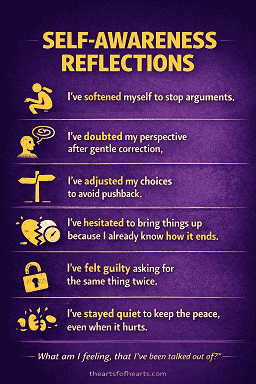
Notice where your energy has been spent. Which patterns feel like old habits you’ve adapted to? Where has your voice been softened, your needs minimized, or your boundaries overlooked? Naming these toxic relationship experiences gives you clarity. You begin to distinguish between what is safe, nourishing, and mutual, and what has become draining or restrictive.
From here, the path can take different forms. Sometimes, it’s a gentle recalibration, setting small boundaries, asserting a preference, or speaking up when you’ve stayed silent.
Other times, it may involve stepping back from dynamics that consistently compromise your safety or self-trust. Either way, every move begins with noticing: understanding what you’ve tolerated, what you need, and what you will no longer accept.
You don’t have to have all the answers right now. Change often comes gradually, in small choices that honor your sense of self. Sometimes it’s a single conversation. Sometimes it’s quietly realigning how you show up for yourself. And sometimes, it’s leaving behind what no longer serves you done with respect, clarity, and care for yourself.


