


















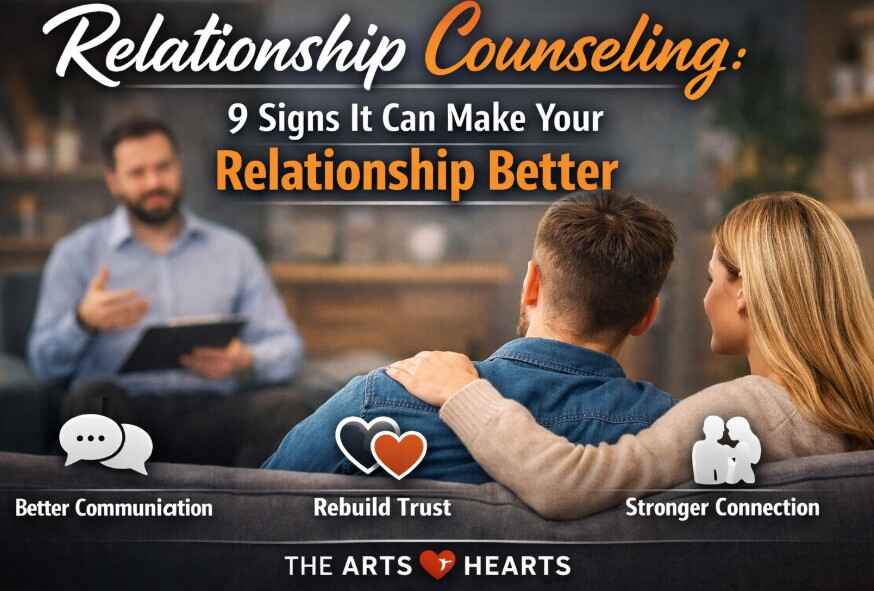
There is a quiet misconception that relationship counselling is only for couples on the brink of breaking up. That belief has kept many people stuck in cycles of frustration, distance, and silent resentment longer than necessary.
The truth is very different. Relationship counselling is not a last resort—it is a strategic tool. Strong couples use it to strengthen communication, rebuild trust, and deepen emotional connection long before things fall apart.
Research consistently shows that couples who seek help often experience measurable improvements in satisfaction, commitment, and overall wellbeing, both in the short and long term.
If you have been wondering whether it is time, here are 9 clear signs relationship counselling can make your relationship better.
1. Communication Feels Like a Constant Struggle
When every conversation turns into a misunderstanding, frustration slowly replaces connection. You start explaining less, assuming more, and reacting instead of listening.
Over time, communication stops being productive and becomes defensive. One partner feels unheard, while the other feels attacked.
Relationship counselling introduces structured communication tools that most couples were never taught. Techniques like active listening and emotional validation help shift conversations from conflict to clarity.
Instead of “winning” arguments, you learn how to actually understand each other—and that changes everything.
2. The Same Arguments Keep Repeating
You have had the same fight so many times that you can predict how it starts and how it ends. Nothing ever truly gets resolved.
This happens because most conflicts are not about surface issues—they are about deeper emotional triggers and unmet needs.
Relationship counselling helps uncover those underlying patterns. It breaks the cycle by addressing the root cause, not just the symptoms.
Without intervention, repeated conflict slowly erodes respect. With the right guidance, it becomes an opportunity for growth.
3. Emotional Distance Is Growing
You are still together, but something feels off. Conversations become shallow. The connection feels weaker. You start feeling more like roommates than partners.
Emotional distance rarely happens overnight. It builds gradually through neglect, unresolved tension, and lack of intentional connection.
Relationship counselling helps couples rebuild emotional intimacy by reintroducing vulnerability in a safe and structured way.
This is where many couples rediscover what brought them together in the first place.
4. Trust Has Been Damaged
Trust issues do not always come from major betrayals. Sometimes they stem from small, repeated moments of dishonesty, secrecy, or emotional inconsistency.
Once trust is broken, it becomes difficult to feel secure again. Doubt replaces peace, and suspicion replaces openness.
Relationship counselling provides a clear framework for rebuilding trust. It focuses on accountability, transparency, and consistent behavior over time.
Studies show that structured therapy approaches can significantly reduce relationship distress and rebuild stability when both partners are committed.
5. Intimacy Has Declined
Intimacy is not just physical. It includes emotional closeness, affection, and the sense of being truly seen by your partner.
When intimacy fades, the relationship often begins to feel empty, even if everything looks fine on the surface.
Stress, unresolved conflict, and routine are common causes. Relationship counselling helps identify what is blocking intimacy and how to restore it.
In many cases, improving communication alone reignites both emotional and physical closeness.
6. You’re Avoiding Difficult Conversations
You know there are things you need to talk about, but you keep postponing them. Not because they are unimportant, but because they feel uncomfortable.
Avoidance creates temporary peace but long-term damage. The issues do not disappear—they grow.
Relationship counselling creates a safe space where those conversations can happen without escalation. A trained professional helps guide the discussion so both partners feel heard rather than attacked.
This is often the turning point where couples stop avoiding and start resolving.
7. One or Both Partners Feel Unheard or Unappreciated
Feeling unappreciated is one of the fastest ways to build resentment. When effort goes unnoticed, emotional withdrawal follows.
Many couples struggle not because they do not care, but because they do not know how to express appreciation in a way their partner understands.
Relationship counselling helps bridge that gap. It teaches partners how to recognize, communicate, and respond to each other’s emotional needs.
This shift alone can dramatically improve relationship satisfaction.
8. You’re Considering Separation but Aren’t Sure
When thoughts of leaving start creeping in, confusion often follows. You are unsure whether the relationship is fixable or if it is time to move on.
Relationship counselling does not force couples to stay together. Instead, it provides clarity.
It helps you understand what is working, what is broken, and whether both partners are willing to do the work required.
In many cases, couples either rebuild stronger or separate with understanding instead of bitterness.
9. You Want to Strengthen an Already Good Relationship
Not every couple in counselling is struggling. Some simply want to grow.
High-performing individuals invest in coaching. Strong couples invest in their relationship.
Relationship counselling can help deepen emotional connection, improve communication, and prepare couples for future challenges.
It shifts your mindset from maintenance to intentional growth.
How Relationship Counselling Works
In a typical relationship counselling session, a trained therapist guides both partners through structured conversations.
You will:
- Explore communication patterns
- Identify recurring conflicts
- Learn practical tools for resolution
- Set shared goals for the relationship
Importantly, therapists do not take sides. Their role is to help both partners understand each other better and build healthier dynamics.
Benefits of Relationship Counselling
The impact of relationship counselling goes beyond just solving problems.
Research and clinical findings show that couples often experience:
- Improved communication and conflict resolution
- Stronger emotional connection
- Increased trust and relationship satisfaction
- Reduced stress and emotional tension
- Long-term improvements in wellbeing
In fact, studies suggest that 60–80% of couples benefit from counselling, especially when they engage early and consistently.
When to Seek Relationship Counselling
Most couples wait too long.
They wait until resentment is deep, communication is broken, and emotional distance feels normal.
The better approach is simple: seek help when you notice patterns, not when things collapse.
If any of the signs above feel familiar, that is already enough reason to consider relationship counselling.
For a deeper understanding of what to expect and how to get started, read this detailed relationship counselling guide:
Taking the First Steps of Relationship Counselling
The goal of relationship counselling is to strengthen a meaningful relationship, not necessarily fix a broken one.
As such, choosing to work on your relationship with professional help is a wise optio demosntrating leadership. It also shows responsibility, emotional intelligence, and commitment to something that matters.
The strongest men and the strongest couples do not avoid problems. They face them, understand them, and grow through them.
And sometimes, the smartest move is knowing when to get help.


